Rostock ⇄ Gedser · 2 hours · 52 km
Crossing review: our Gedser Rostock ferry trip on the Berlin, step by step
February 2025, a weekday morning. We drove from Copenhagen to Gedser to take the ferry Berlin to Rostock, the last leg of a three-day route test through Denmark and Sweden.
Booking online avoids the handling fee of at least €15 at the harbour.Book online & save at least €15
This is how the crossing went, from the empty road to the port to the police check at the exit in Rostock, with our own photos, so you know what to expect.
Taking this ferry for the first time? Then you probably have questions: where do I go, when should I be there, what is there to do for two hours. Hence this report. Everything below comes from our own crossing from Gedser to Rostock: Bram and Robbert of FerryGoGo, two people in one car. Sailing the other way, from Rostock, works on the same principle. Where something differs by ticket or by season, we say where to check it.
1. Preparation: ticket, times and what to take upstairs
- Book ahead. Online is cheaper than at the harbour, and the cheap Low Price ticket is not sold at the harbour at all. Every ticket and what it allows is on the prices page.
- Plan around the departure. By day the sailings are roughly two hours apart, so a missed ferry costs you far more time here than on a short crossing. Today’s sailings are in the timetable.
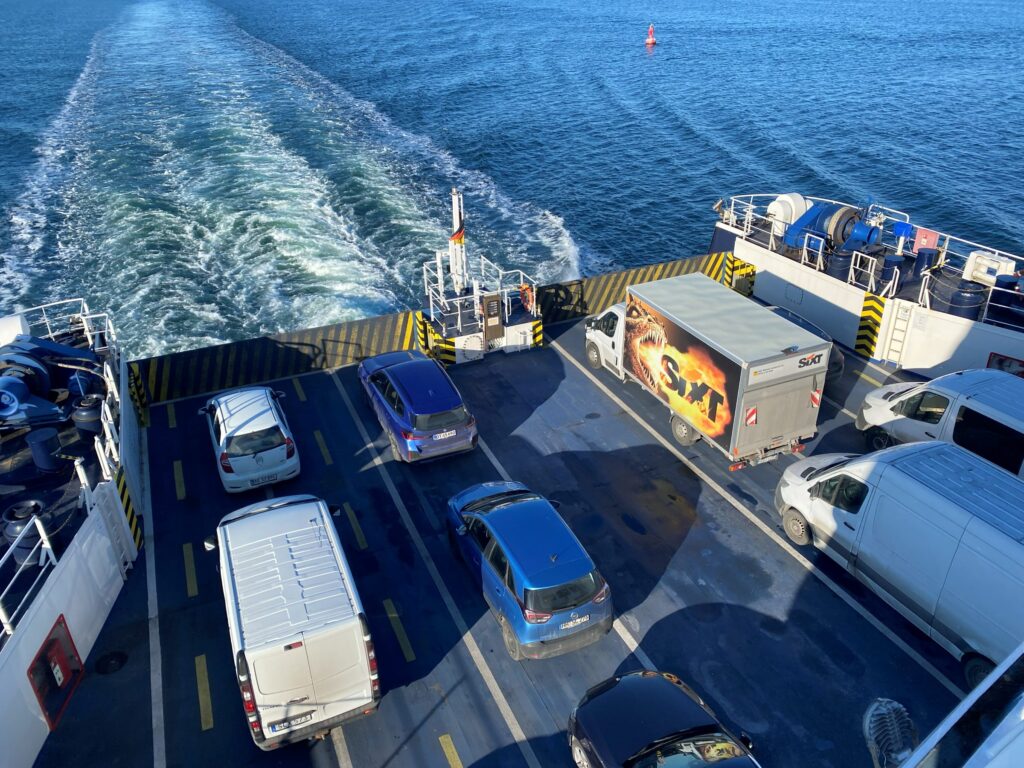
- Pack for two hours upstairs: jacket, charging cable, snacks, and the dog lead if you travel with a dog. The car deck is closed during the crossing.
- Download tickets and maps beforehand. In the waiting lane in Gedser our phone connected to the wifi but had no internet.
- Look at the weather. Wind and waves for the crossing are on the page about weather and sea conditions.
This is the story of one crossing. Current times, fares and practical information are on the pages we link to.
2. The drive to Gedser
After breakfast in Copenhagen we took the E47 and E55 south, over Farø and on to Falster: about 160 km and two hours. The E55 ends in Gedser, so you cannot really go wrong.
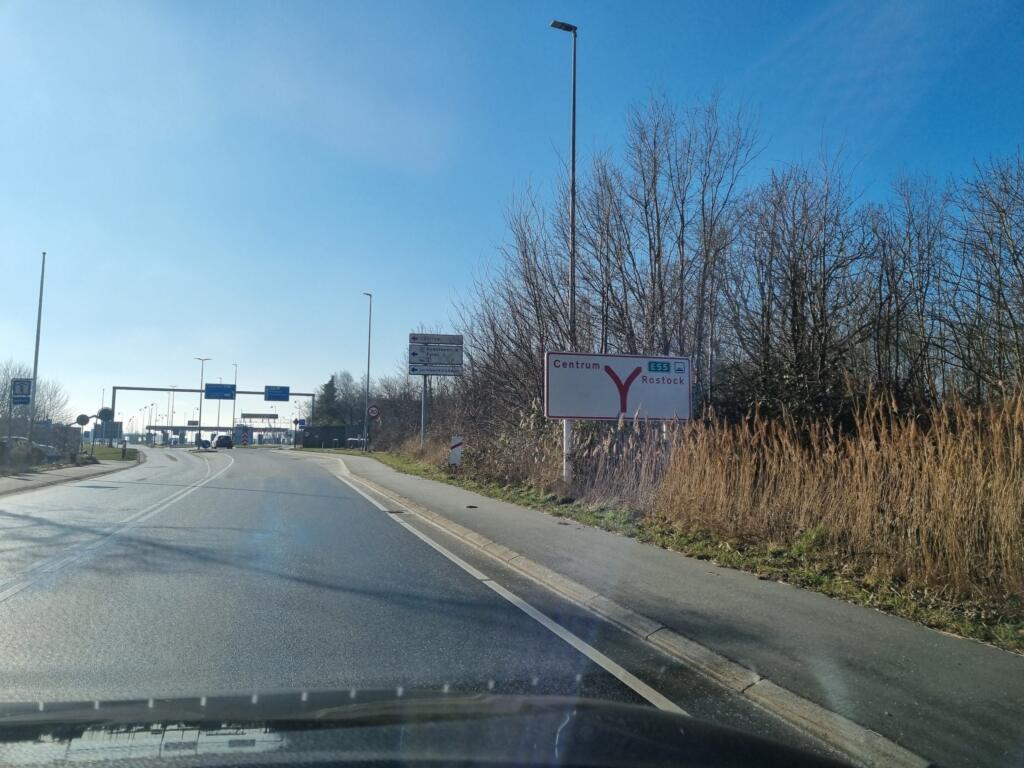
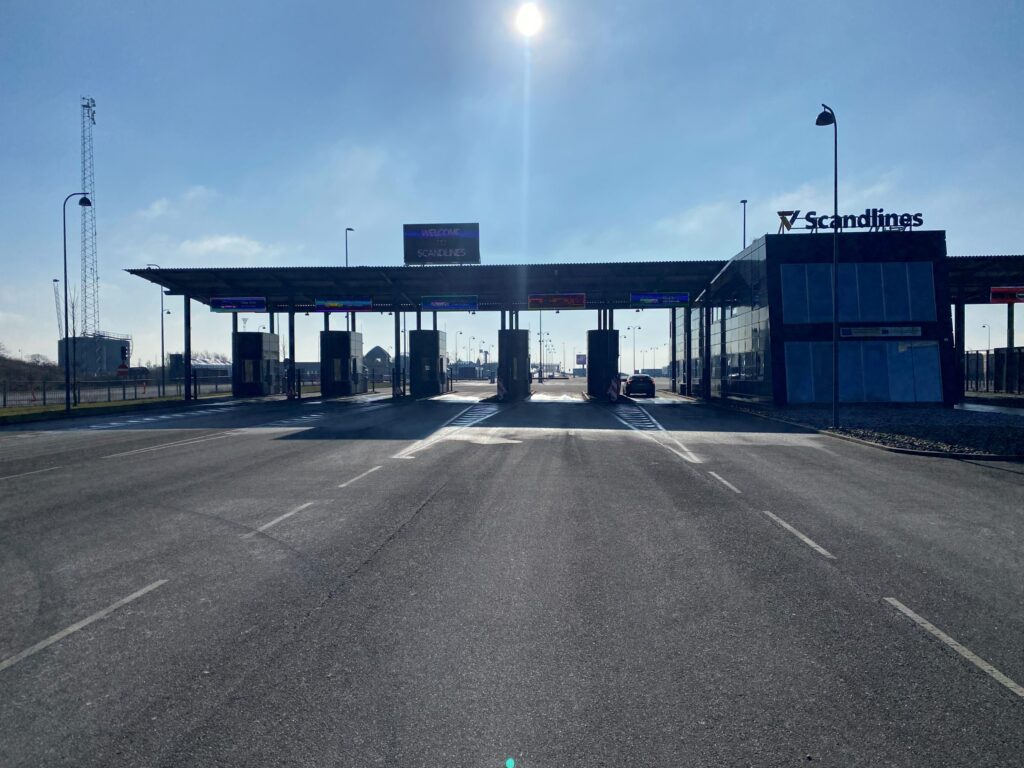
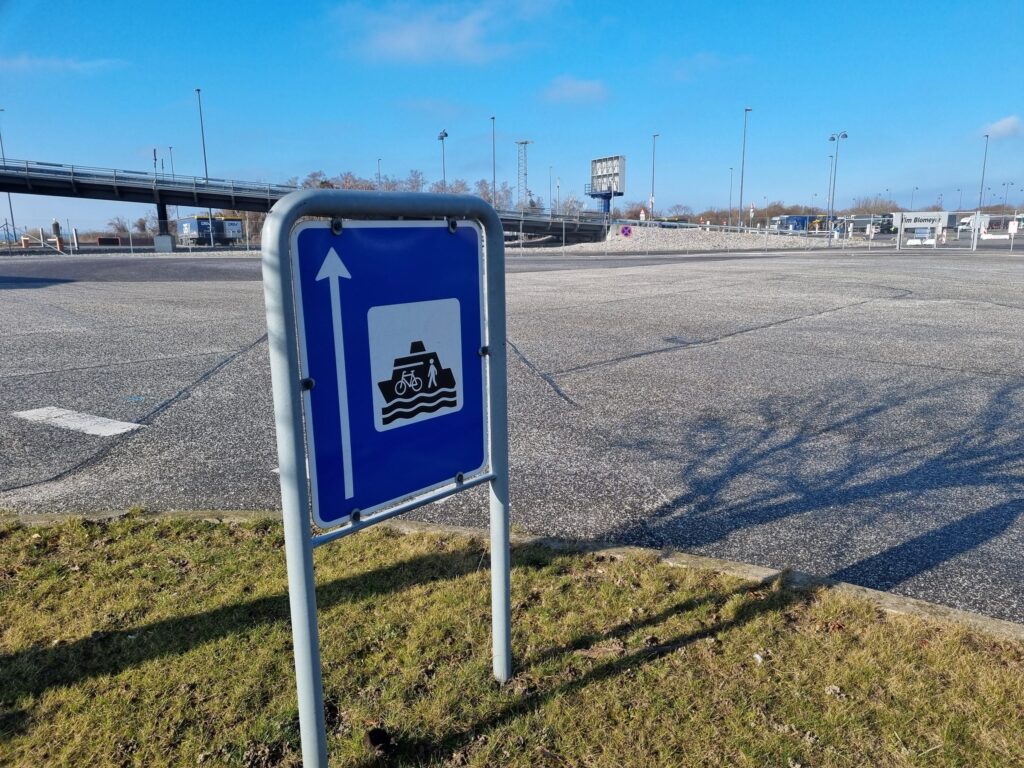
At the last junction before the port a sign splits traffic between “Centrum” and “E55 Rostock”. Stay on the E55 and the overhead signs lead you straight to the check-in booths. Foot passengers and cyclists turn off before the booths.
The road is quiet outside the summer holidays. On our weekday in February we drove from the motorway to the check-in booth without meeting another car in the lanes.
3. Too early: an hour in Gedser
We arrived well before our sailing. Gedser is a small harbour town and there is not a huge amount to do, so we bought some snacks, walked through the village and looked around the terminal.
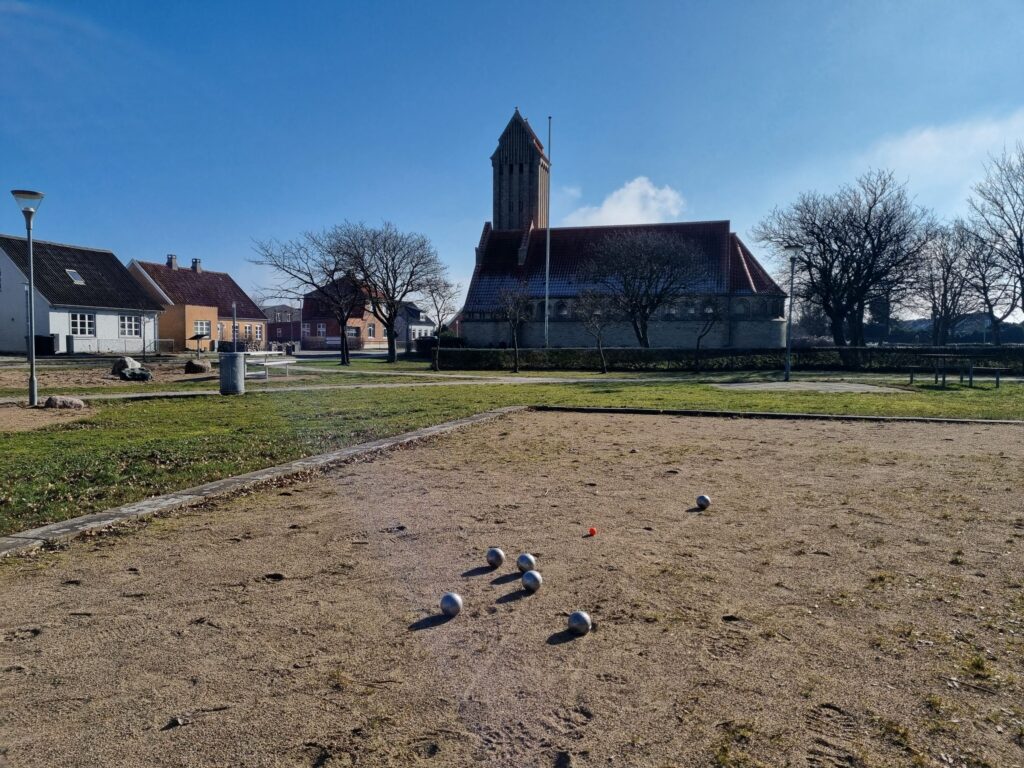
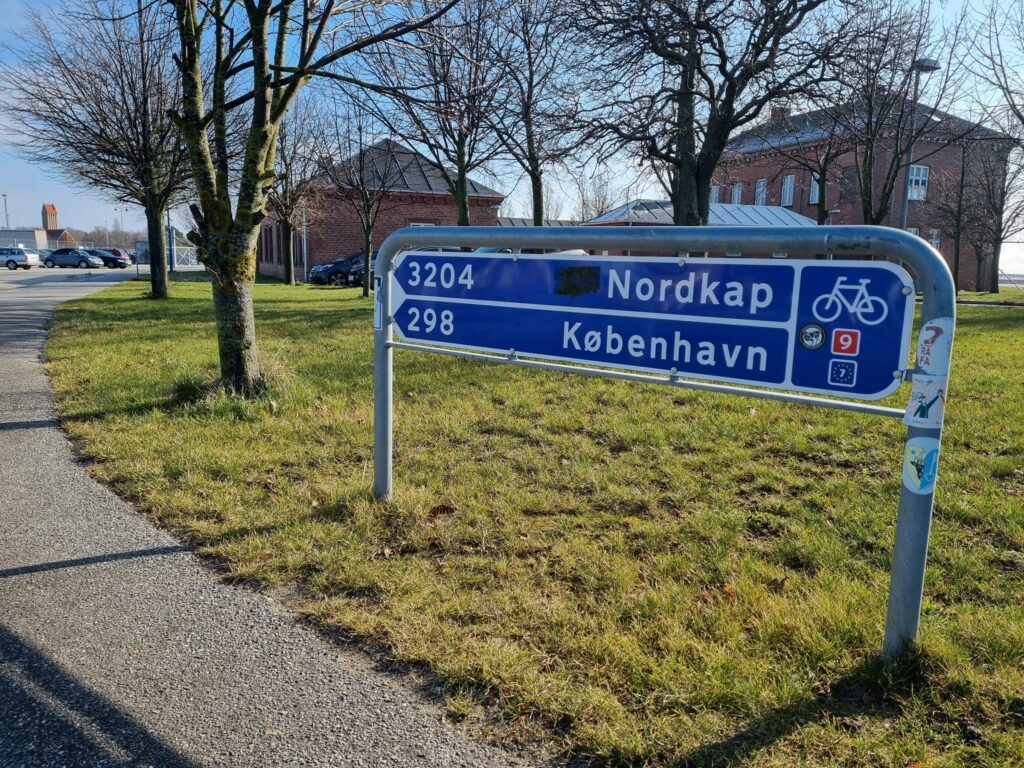
The village is a ten minute walk from the port: a supermarket, a few cafés, and a church with a tall brick tower next to a pétanque court. A cycle sign puts Copenhagen at 298 km and the North Cape at 3,204 km.
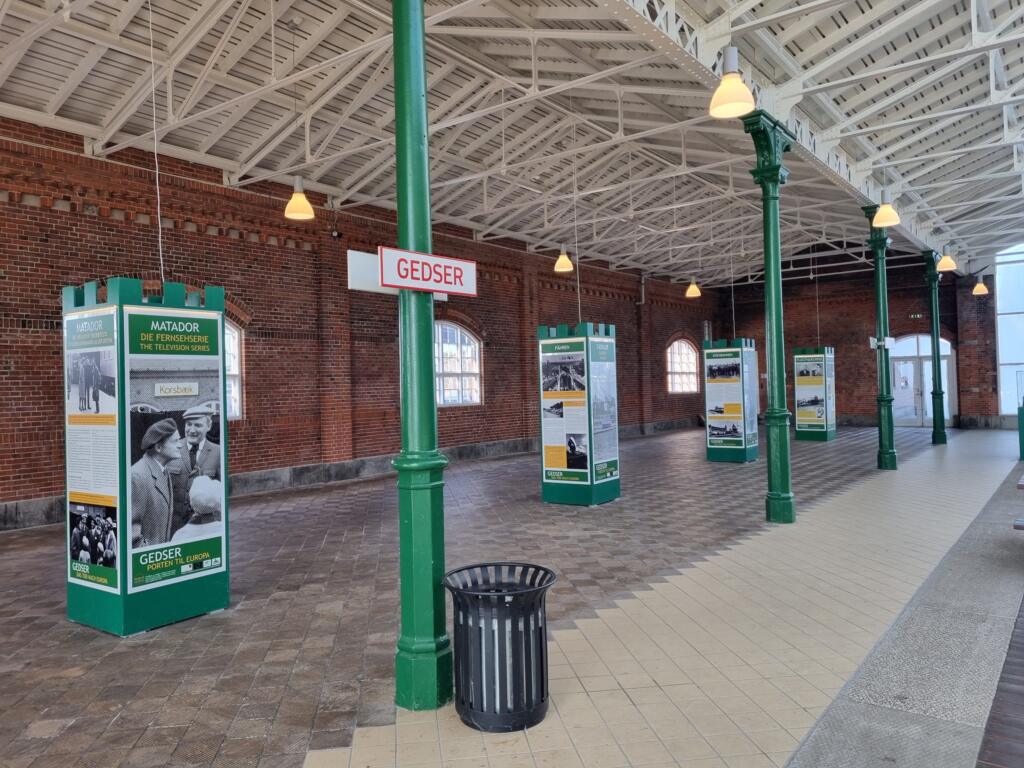
The terminal is worth five minutes. It is the old railway station, red brick with a glass roofed hall, and today it holds the waiting room, the ticket machines and a small free exhibition on the history of the port. There is no café in the terminal: the nearest coffee is in the village or on board. More on the port is on the page about Gedser ferry port.
4. Check-in and driving on board
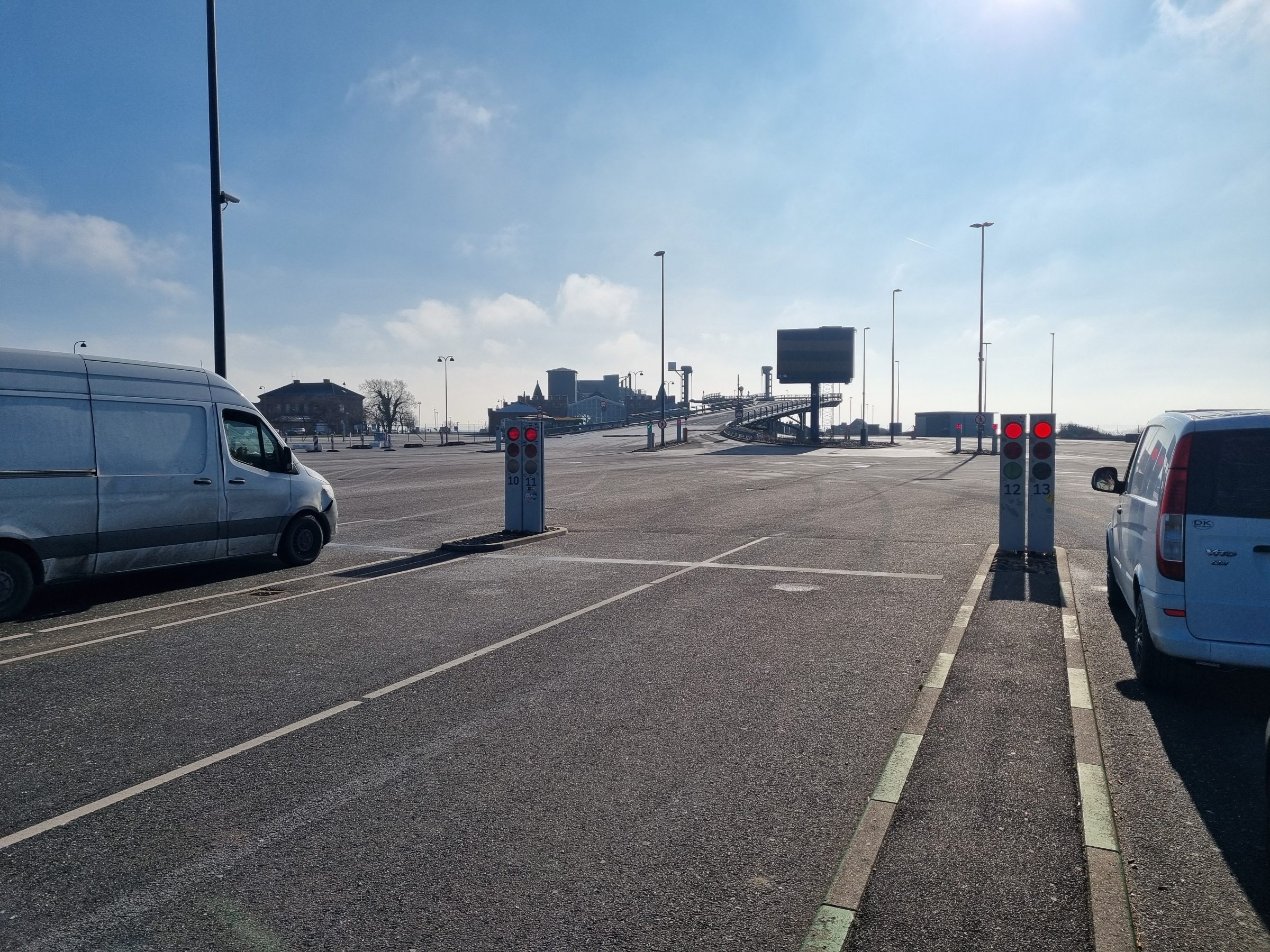
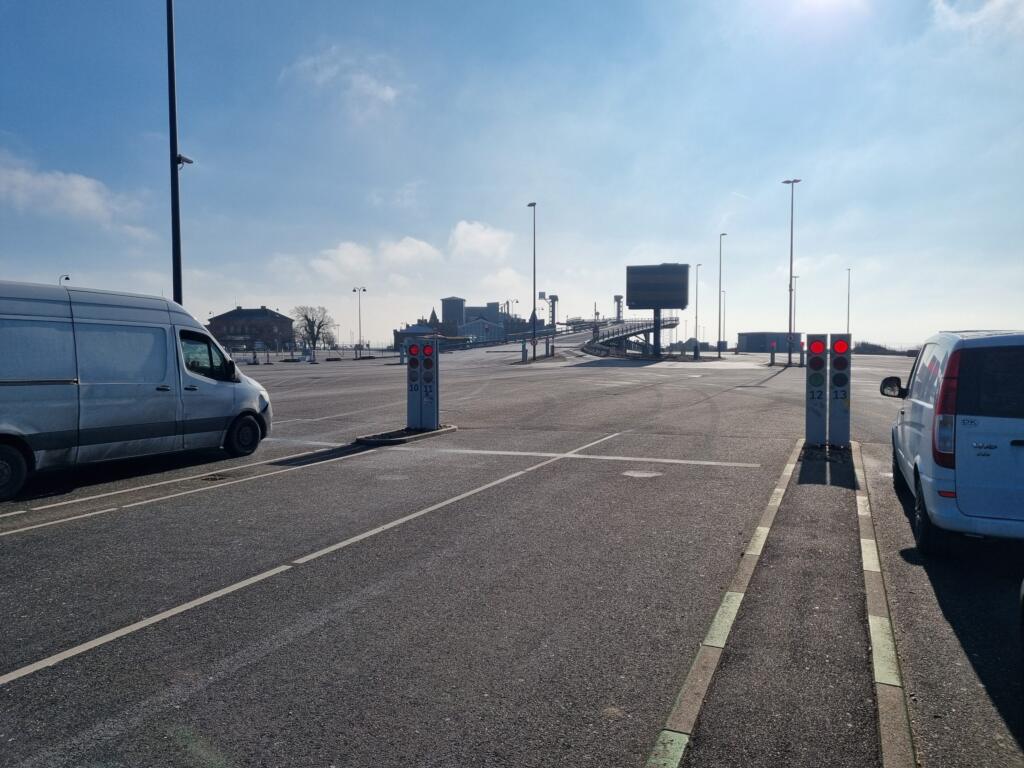
At the booth you show your booking, or the camera reads your licence plate, and a display sends you to a numbered waiting lane. We were sent to lane 13. Each lane has its own traffic light.
When do you need to be there? Check-in for cars closes 15 minutes before departure. With a motorhome or trailer, and in summer, 30 to 45 minutes is more comfortable.
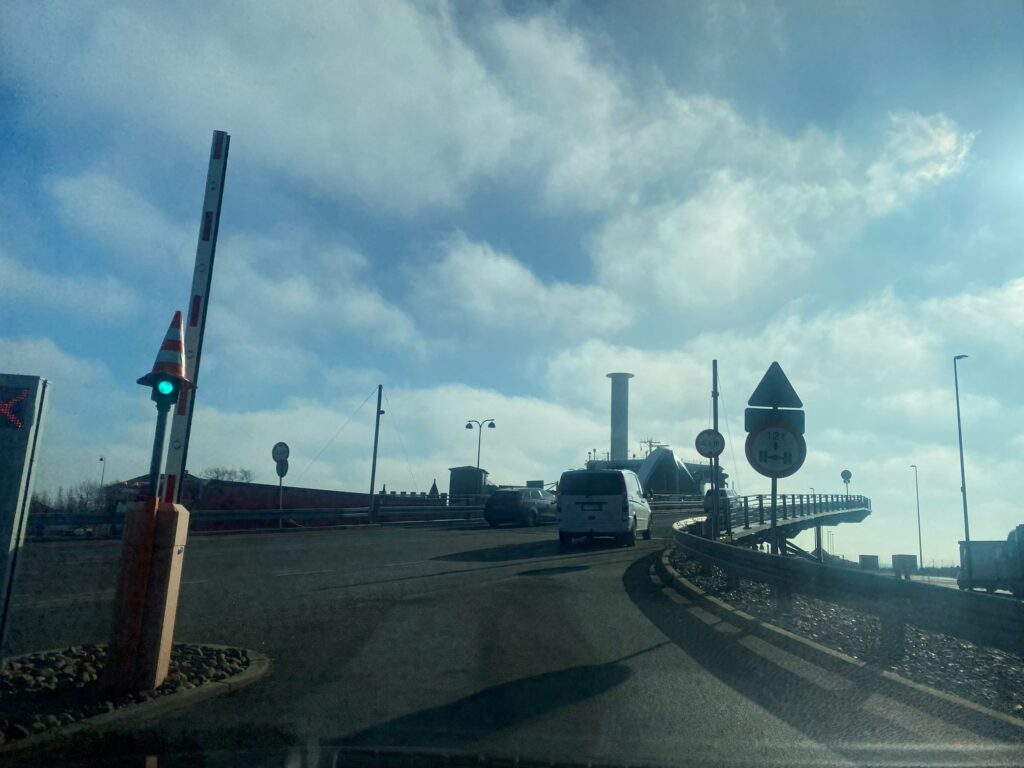
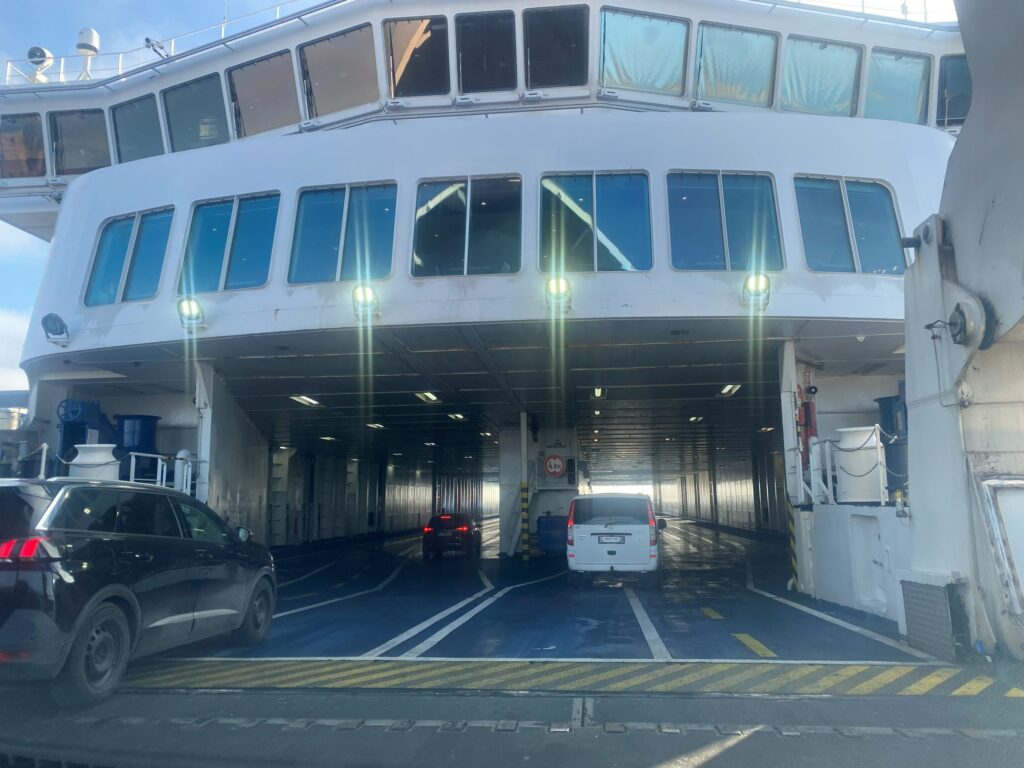
Boarding is over an elevated ramp onto the car deck. The ramp is signed with a height limit of 4.2 metres, and inside the car deck a 4.0 metre sign hangs. The crew points you to a place, and then it is handbrake on and up the stairs.
5. Two hours on board the Berlin
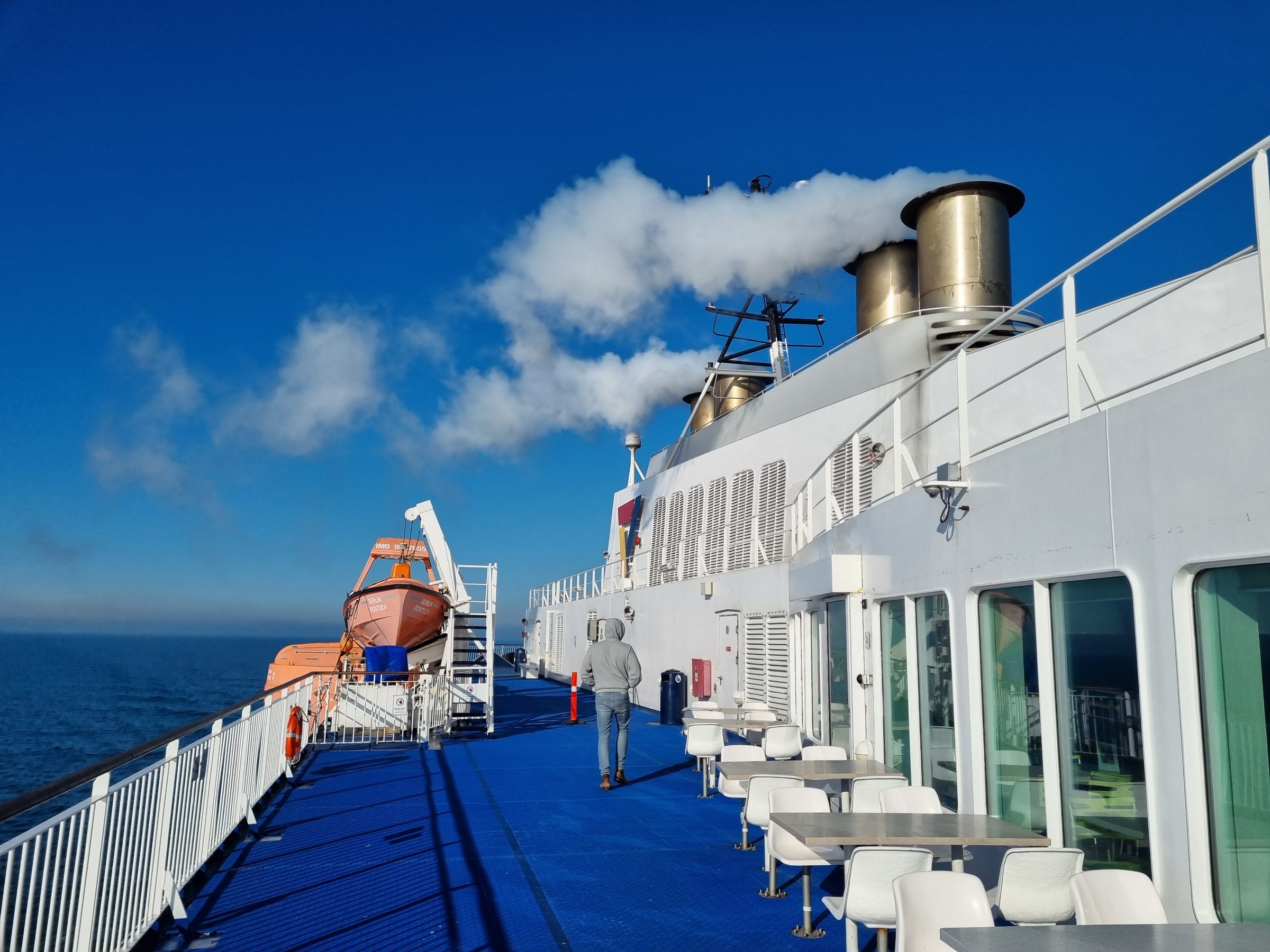
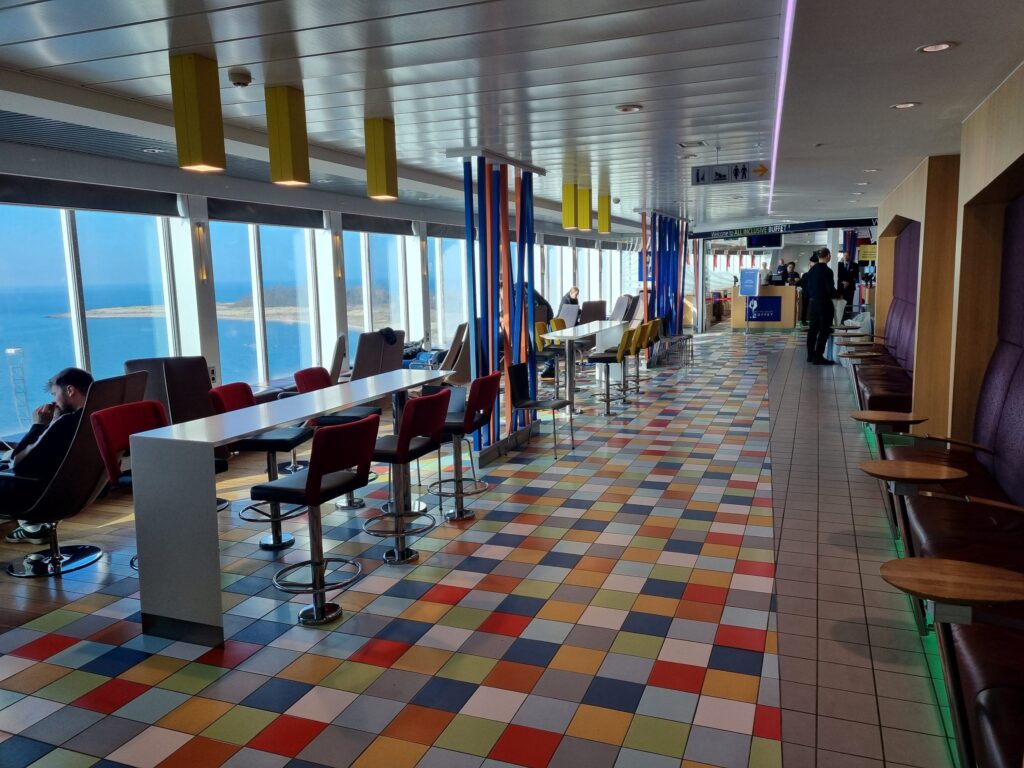
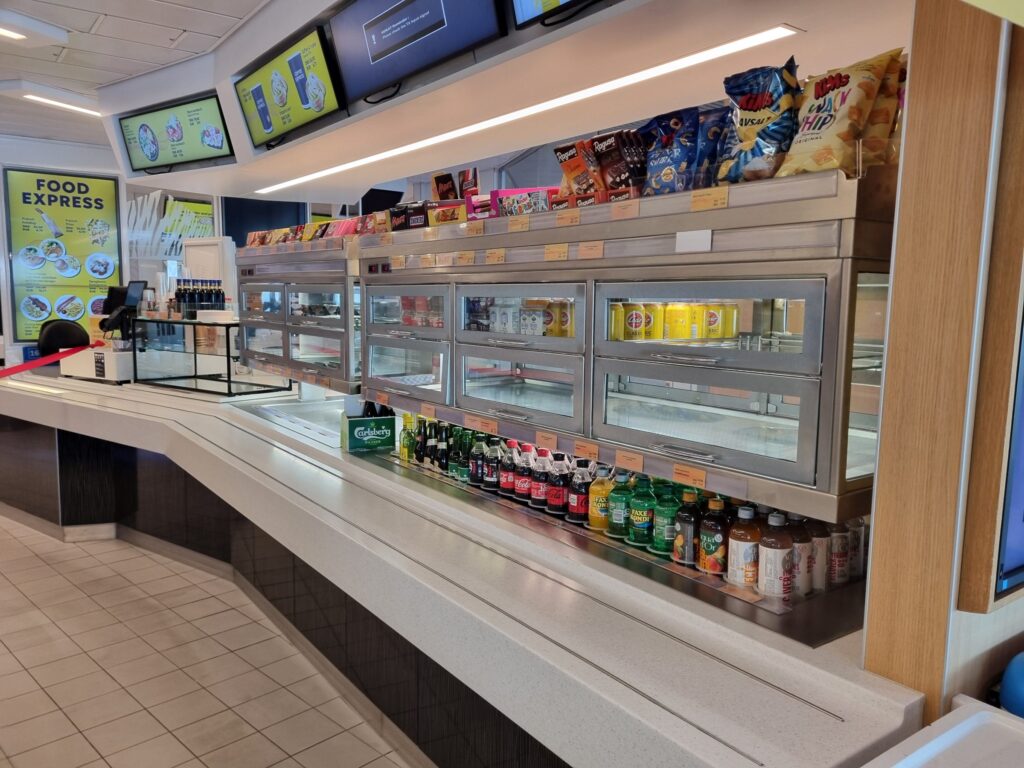
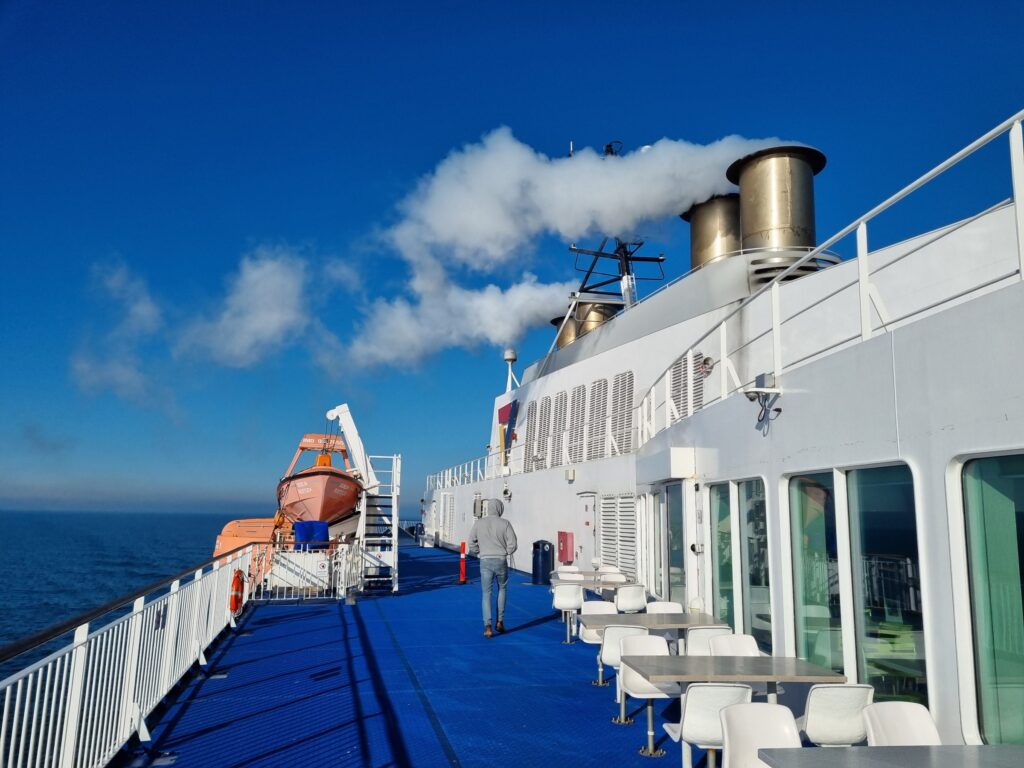
Compared with the short hop from Puttgarden to Rødby you have much more time on board here, and that makes the crossing feel like a real break. The restaurant, Food Express and the shop are on deck 5, the coffee bar and more seating on deck 8, and the open deck with benches is at the very top.
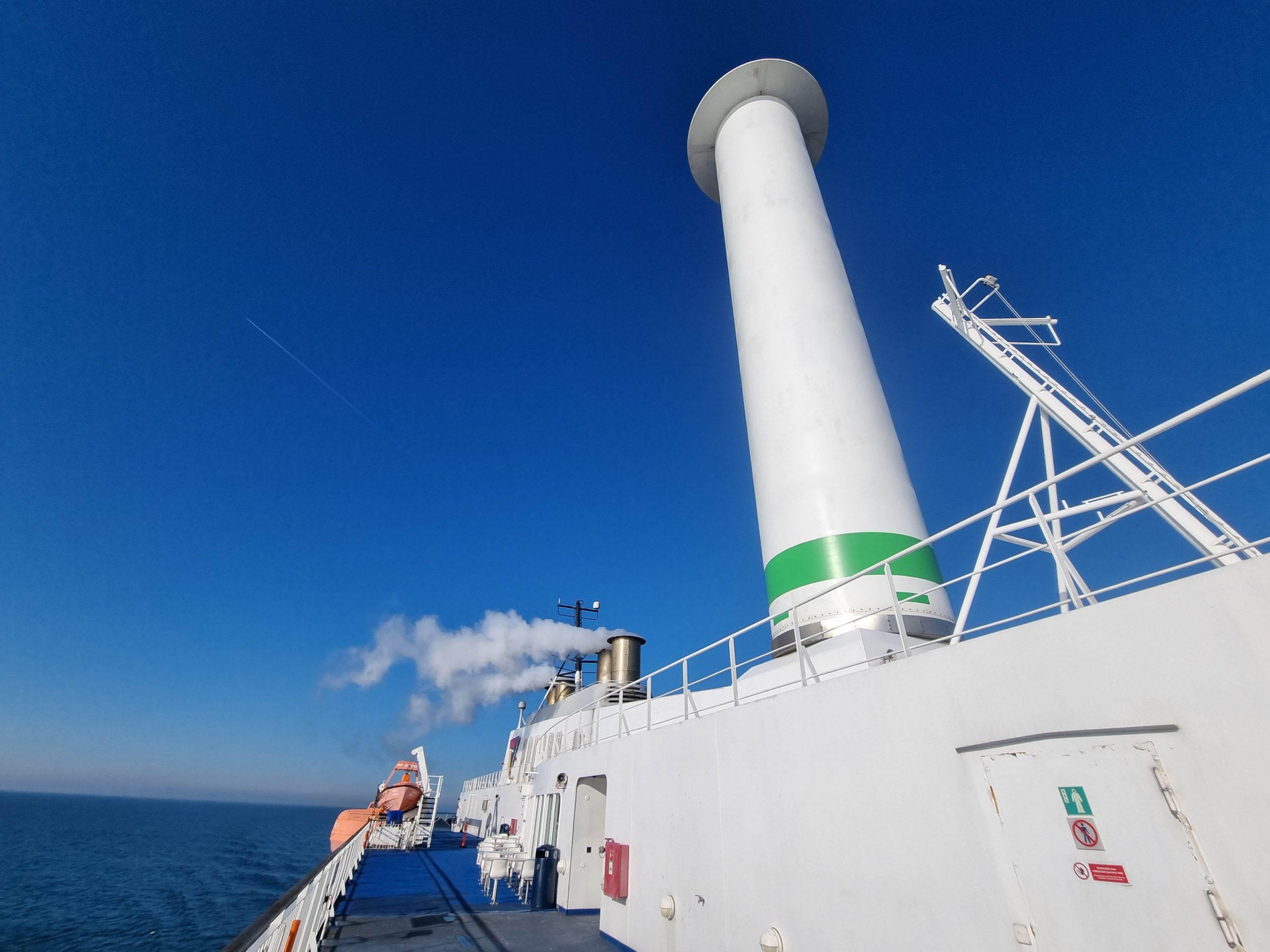
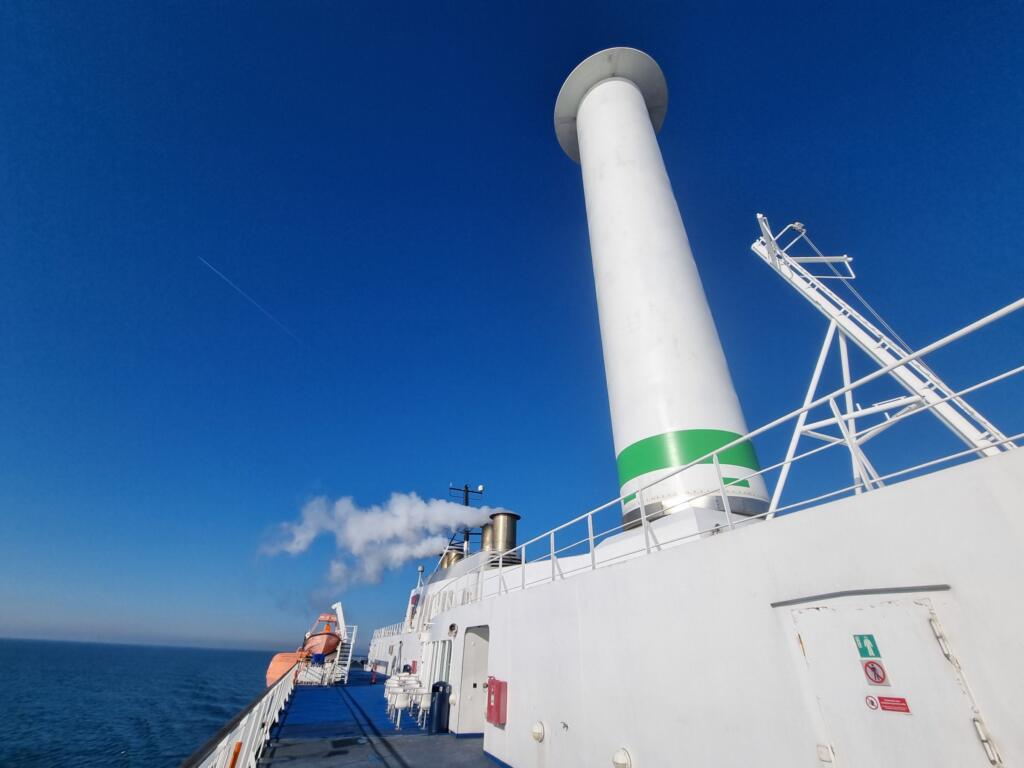
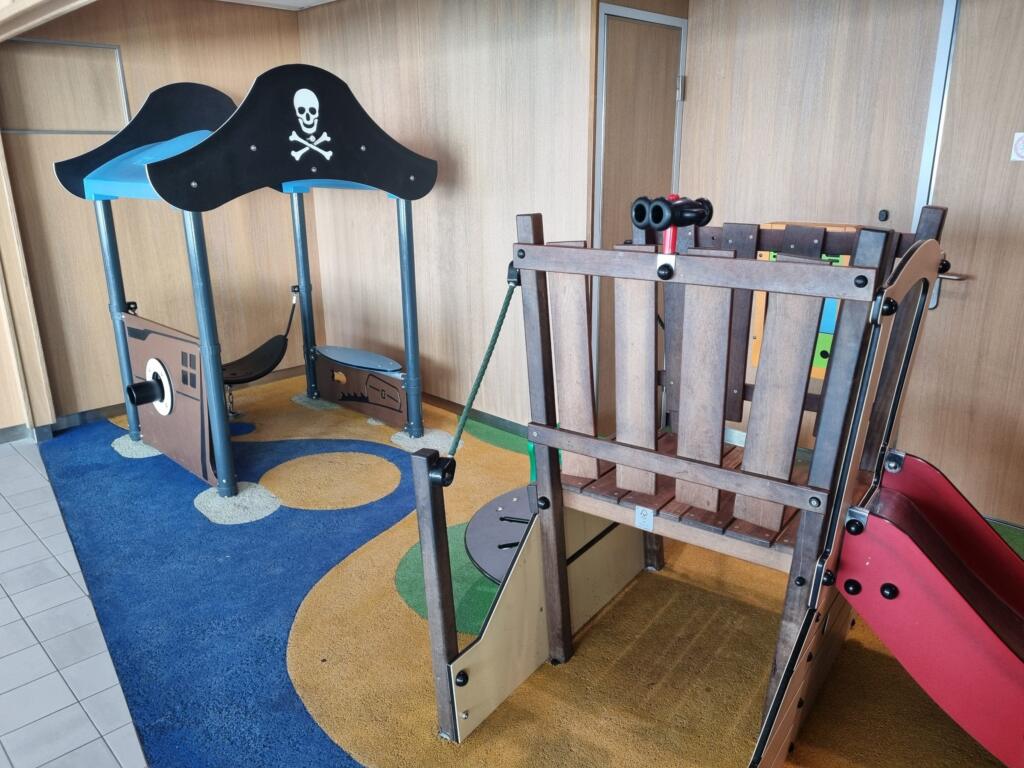
What stood out most was the rotor sail, the tall cylinder on deck that helps the ship use wind power. From outside you see how big it is. Inside there is a lounge with large windows, a play area for children and a buffet restaurant where you pay once and eat during the crossing. On our quiet winter day it was half empty.
One thing no timetable mentions: during our sailing the police held a training exercise on board. It did not get in anyone’s way, but it made the crossing one to remember.
A practical tip: the queue at Food Express is longest right after departure, so fetch your coffee twenty minutes later. What there is on every deck, with the prices we saw, is on the page on board the ferry.
6. Arriving in Rostock
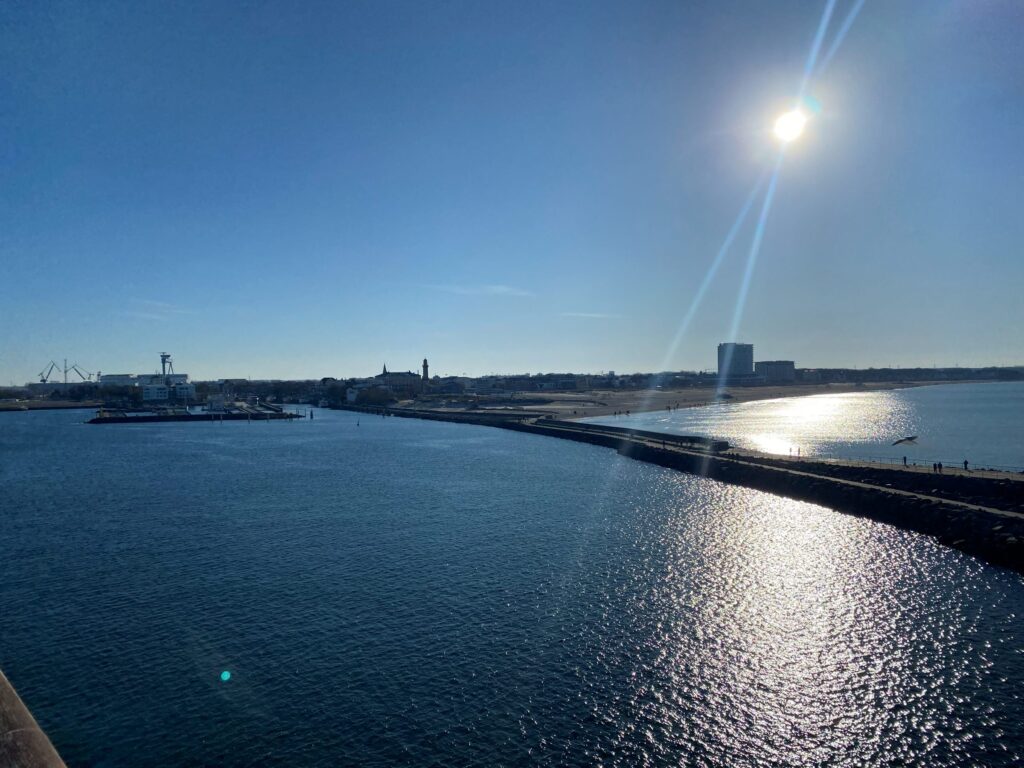
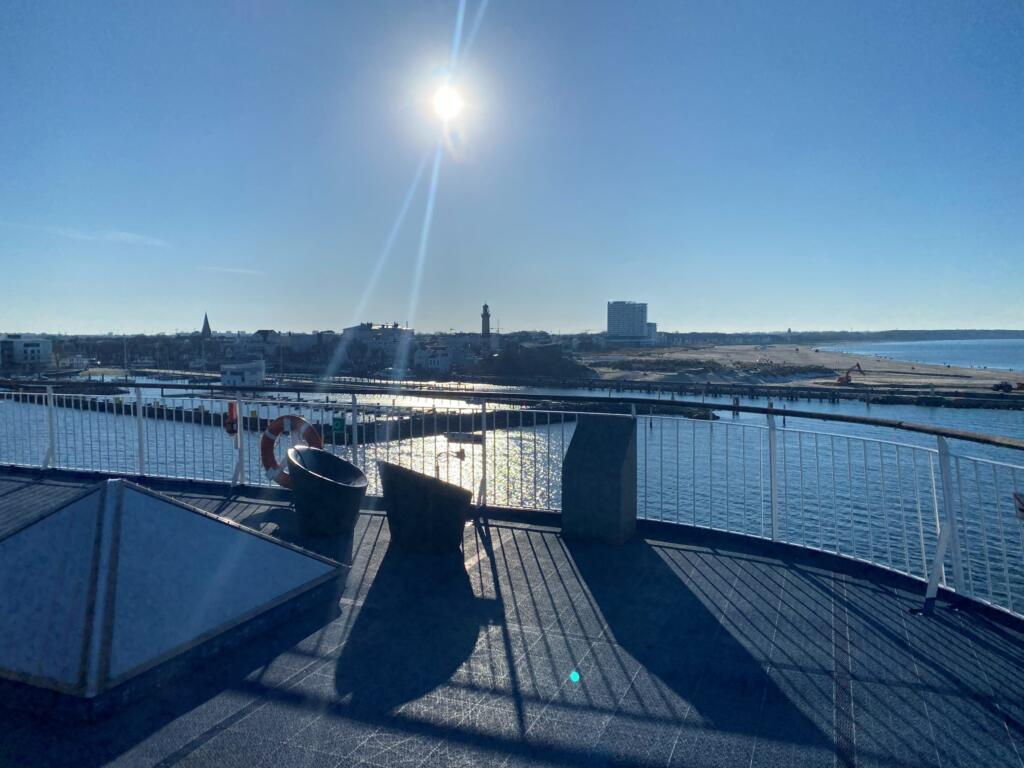
The last half hour is the best part. The ferry passes the breakwaters of Warnemünde, with the lighthouse and the beach on your right, and then slows down for the long run up the Warnow, past the cruise terminal and the shipyard cranes.
There is no rush to get to the car deck: the call comes about ten minutes before berthing. Our crossing took around two hours, a little longer than usual because of a headwind.
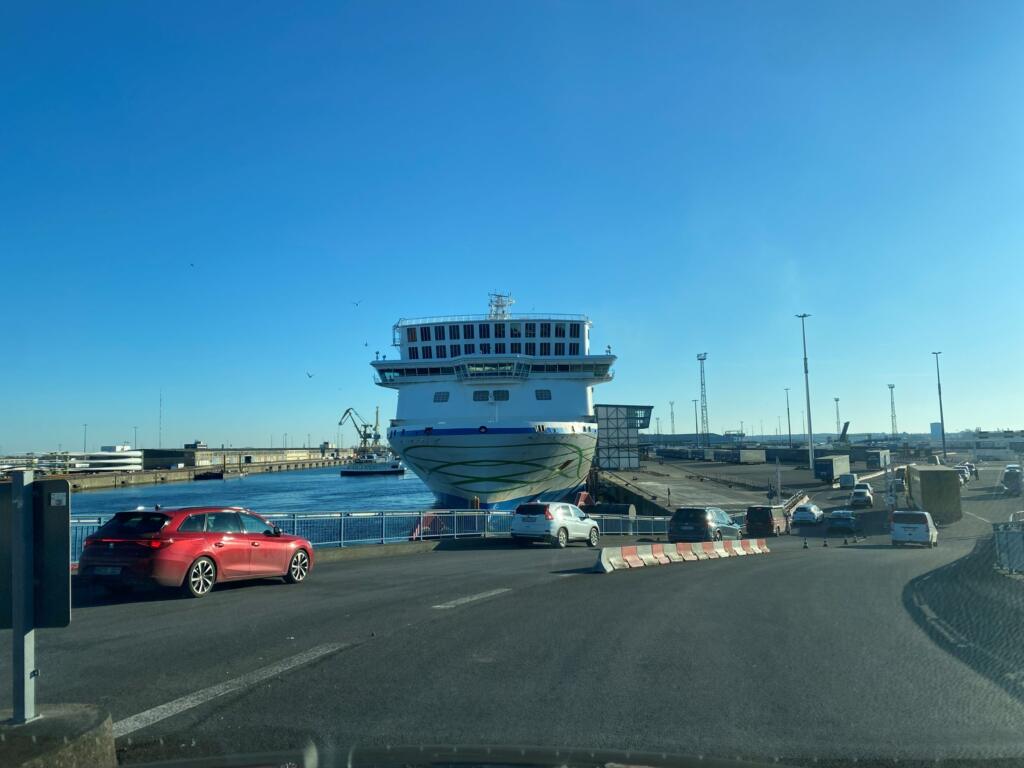
When we drove off, the police were checking individual vehicles at the port exit. It was quick, but keep passports and vehicle papers within reach rather than in the boot. What comes after the port is on the page about Rostock ferry port.
7. We sailed both routes on one trip
On the way out we took the other ferry between Germany and Denmark, Puttgarden to Rødby. That makes the comparison easy:
- Puttgarden Rødby is a break in the drive. 45 minutes, a ferry about every 40 minutes by day, just enough time for a coffee on deck.
- Gedser Rostock is a real pause. Two hours, enough for a meal and a walk on deck, and you arrive rested. In return there are far fewer sailings, so your timing matters more.
- The route decides. Towards Berlin and the east Rostock saves driving; towards Hamburg and the west Puttgarden is the shorter way. When each one wins is on the page about alternatives.
Going on to Sweden from Denmark? We drove the Øresund Bridge out and took the Helsingør Helsingborg ferry back; how both go into one booking with this ferry is on combination tickets to Sweden.
Gedser Rostock crossing: frequently asked questions
What is the Rostock Gedser crossing like?
Calm and unhurried: about two hours on a large ferry with a restaurant, a coffee bar, a shop, a play area and an open deck. It feels like a break from driving more than a transfer.
Do I have to book in advance?
It is not required, but booking online ahead is usually cheaper, and the sailings are roughly two hours apart, so a full ferry costs you time. Without a booking you pay the harbour price.
Can I stay in the car during the crossing?
No. The car deck is closed during the crossing and all passengers go upstairs. Take with you what you need for two hours.
Is there a passport check on the ferry?
There is no routine control, because Germany and Denmark are both in the Schengen area, but you need to carry a valid passport or ID card. Spot checks happen: when we arrived in Rostock the police were checking cars at the port exit.
How early do I need to be at the port?
Check-in for cars closes 15 minutes before departure. With a motorhome or trailer, and in summer, 30 to 45 minutes is more comfortable.
Making the crossing yourself? Current fares are shown directly in the booking.
Booking online avoids the handling fee of at least €15 at the harbour.