Rostock ⇄ Gedser · 2 hours · 52 km
Weather on the Rostock Gedser ferry: wind, waves and what it means for your crossing
Two hours across the open Baltic is usually calm, but a stiff westerly can make the crossing bumpy and a real storm can cancel sailings.
Booking online avoids the handling fee of at least €15 at the harbour.Book online & save at least €15
Here you find the forecast for both ports, live wind and wave maps for the route, the wind strength at which Scandlines starts cancelling, and what to do when the weather turns.
Forecast at Rostock and Gedser
Temperature, wind speed and wind force in Beaufort for the next four days at both ends of the route, updated automatically. Anything up to 5 Beaufort is a normal crossing. From 7 Beaufort you will feel the ship move, and at 9 and above Scandlines may cancel sailings.
Rostock
Loading forecast…
Gedser
Loading forecast…
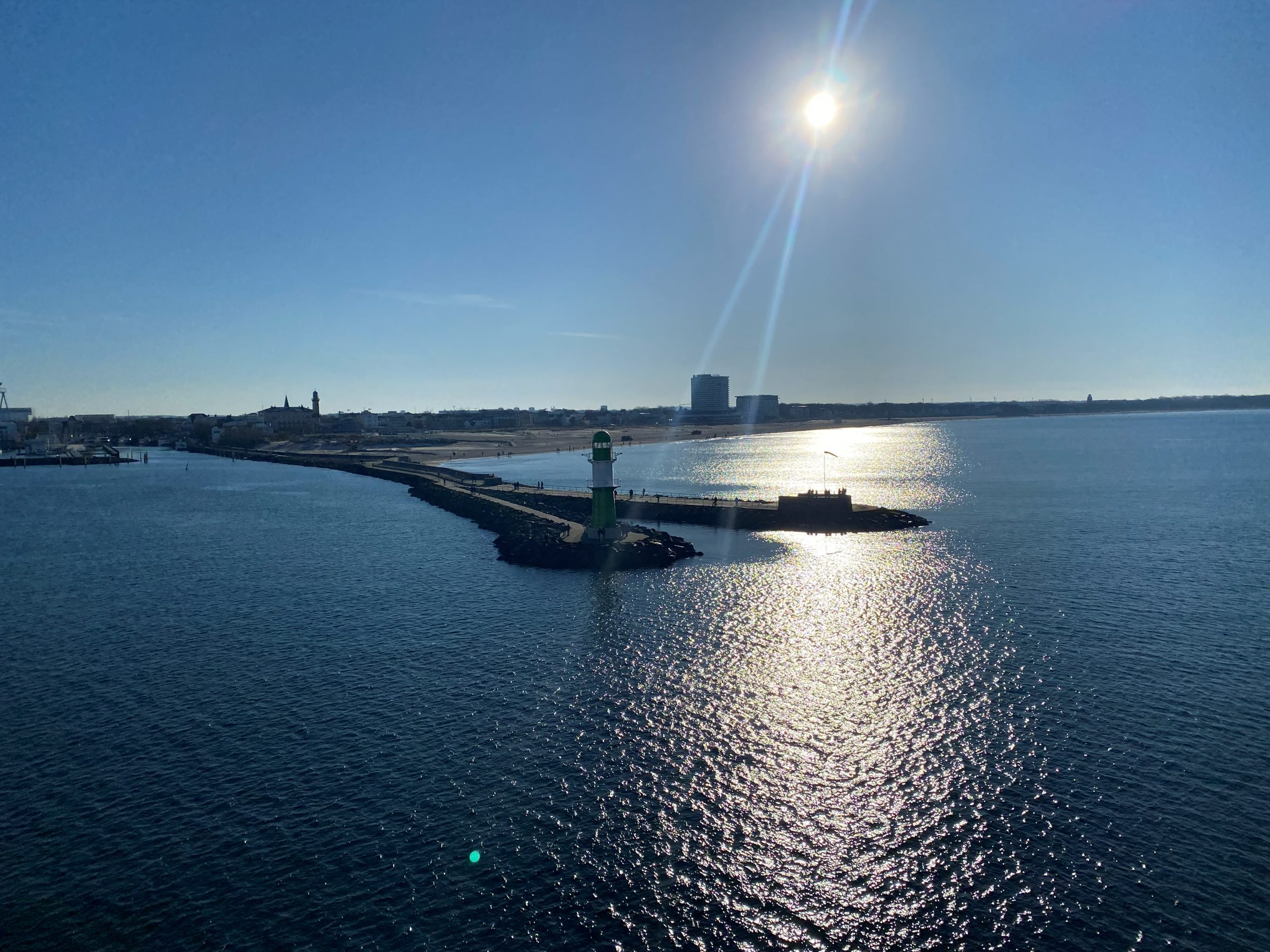
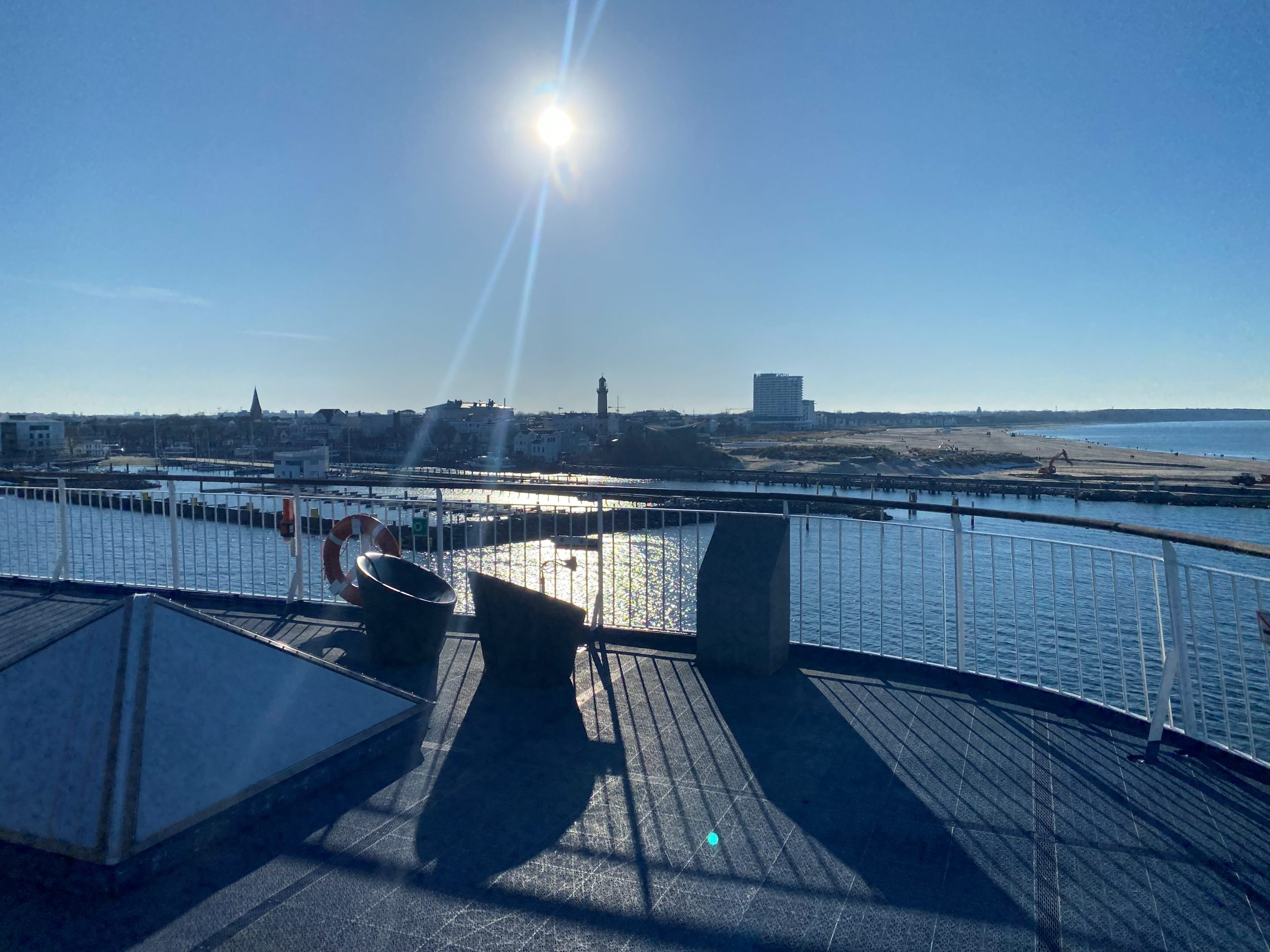
Our crossing: February 2025, clear sky, light wind, a flat sea and frost on the grass in Gedser. The outer deck was the place to be despite the cold. That is the typical winter high pressure day; the trouble comes with autumn and winter westerlies.
Live wind and wave maps for the route
The maps show the sea between Rostock and Gedser. Arrows and colour give wind direction and strength; on the wave map, blue is calm and purple to red means a rough crossing. Use the timeline at the bottom to look a few days ahead.
Maps by Windy.com. For a broader look at ferry weather across Europe, the site FerryWeather.com collects forecasts per route.
When the Baltic gets rough
The route runs almost due north across the Mecklenburg Bight, open water with about 50 km of fetch to the west. Westerly and north westerly winds push the waves straight across the ship’s path, so those are the days you notice. Easterlies are more sheltered. Summer is mostly calm; October to March brings the low pressure systems that make headlines.
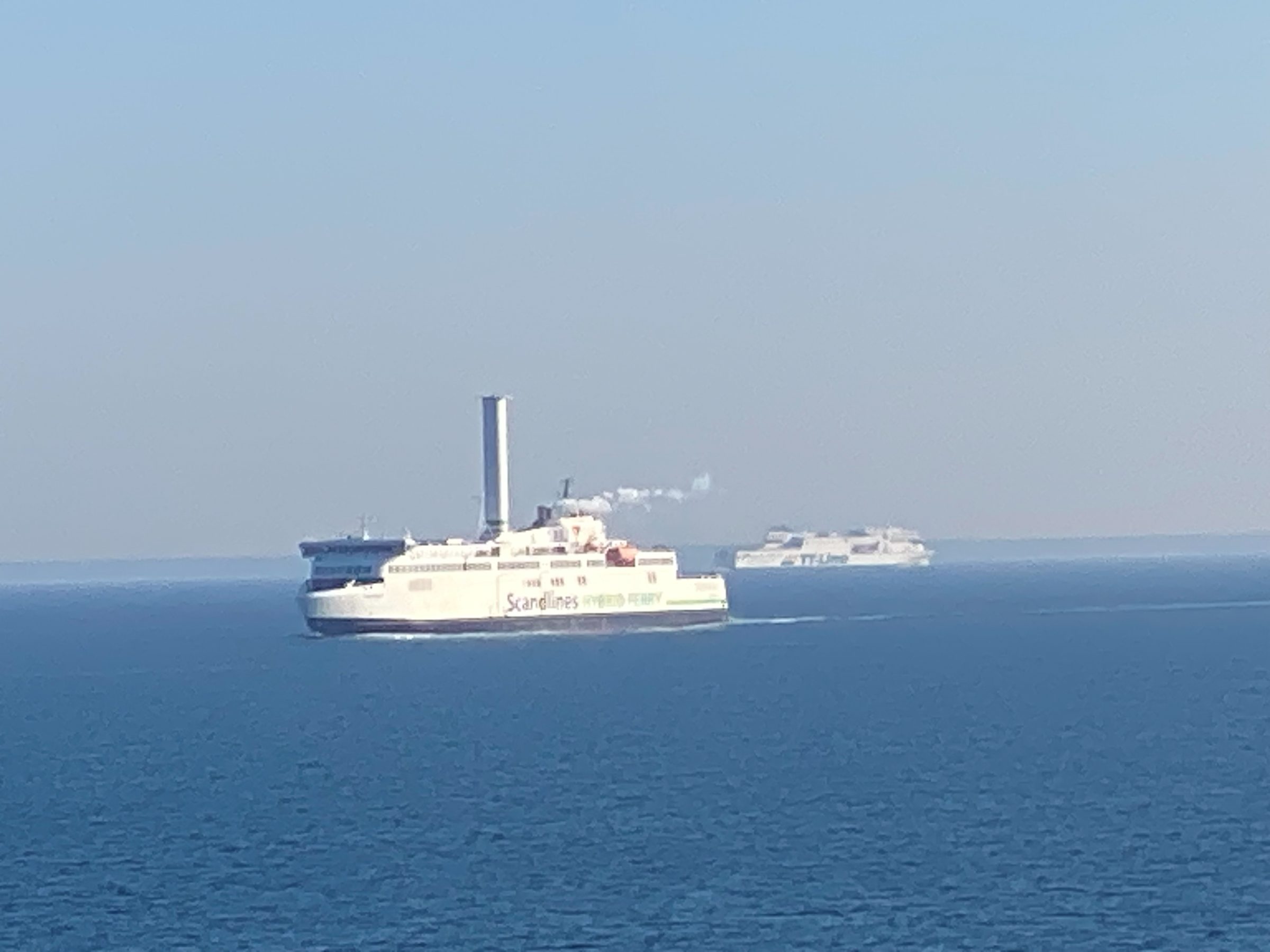
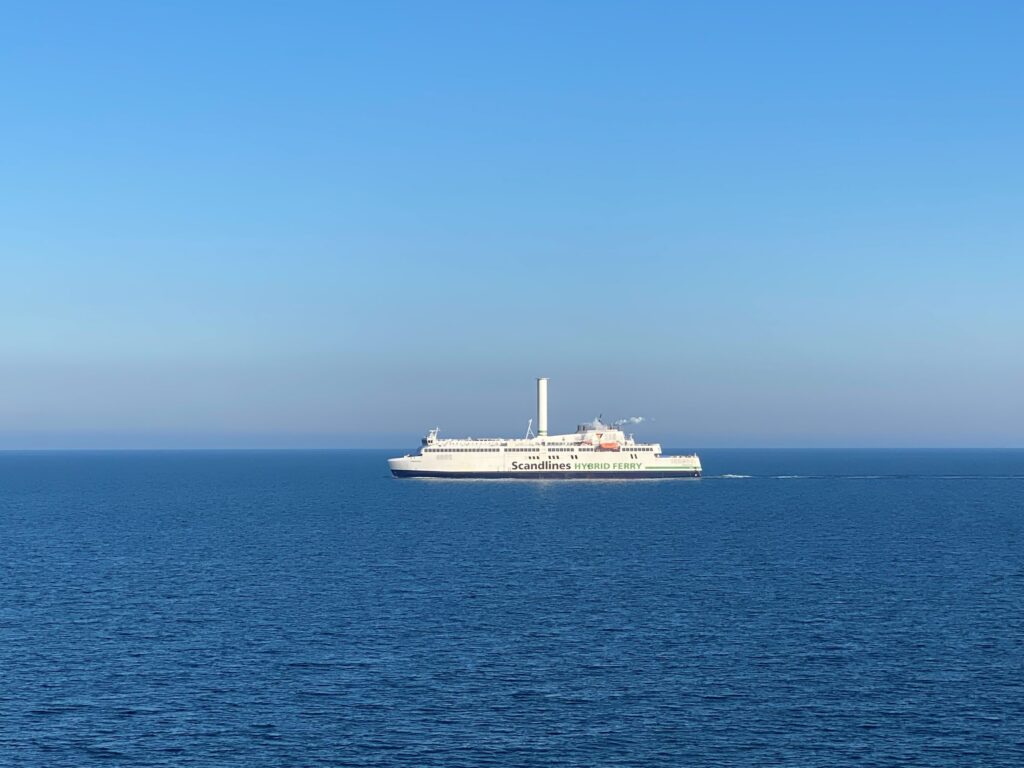
The Berlin and the Copenhagen are big, stable ships of 169 metres, and their rotor sails are lowered or feathered in strong wind. In our experience the two hours are smooth in anything up to a fresh breeze. A near gale, 7 Beaufort, means noticeable rolling on the outer deck and a few closed doors; the ferries normally still sail.
What happens when sailings are cancelled
- Scandlines cancels when the wind makes berthing unsafe, typically at storm strength from the west. Delays and cancellations appear on the Scandlines departure board, check it before you set off in bad weather.
- With a Standard or Flex ticket you can take another sailing that day with free space, with Flex also another day at no charge. Low Price tickets are tied to the sailing, but a cancellation by Scandlines is not your fault: contact them for rebooking.
- If Rostock Gedser is disrupted, Puttgarden Rødby, 150 km to the west, is often still running, since the 45 minute crossing is more sheltered.
- Give yourself a buffer on the Danish side in winter: the E55 south of Nykøbing Falster is a two lane road and snow or ice slow it down.
Seasickness on a two hour crossing
Most people barely notice the movement on this route. If you are sensitive: sit low and in the middle of the ship, in the lounge near the windows rather than at the bow, look at the horizon, skip the buffet until you are sure, and take tablets an hour before boarding rather than on board. Fresh air on the outer deck helps more than a cabin corridor. Two hours pass quickly, and the last half hour up the Warnow or into Gedser harbour is sheltered and usually flat.
Weather FAQ
At what wind strength does the Rostock Gedser ferry stop sailing?
Scandlines does not publish a fixed limit; cancellations happen at storm strength, usually with strong westerly winds. Check the Scandlines departure board on stormy days.
Is the Rostock Gedser crossing rough?
Usually not. It is open water, so a strong westerly makes it bumpy, but the ferries are large and stable and most crossings are smooth.
Where can I see the forecast for the crossing?
On this page: the port forecasts update automatically and the Windy maps show wind and waves on the route for the coming days.
What if my sailing is cancelled?
Contact Scandlines for the next available sailing. Standard and Flex tickets can be moved to another sailing that day. Puttgarden Rødby is the fallback if the whole day is lost.