Rostock ⇄ Gedser · 2 hours · 52 km
Rostock ferry port: getting there, check-in and what to expect
The Scandlines ferry to Gedser leaves from the Überseehafen on the east bank of the Warnow, not from Warnemünde and not from the old town.
Booking online avoids the handling fee of at least €15 at the harbour.Book online & save at least €15
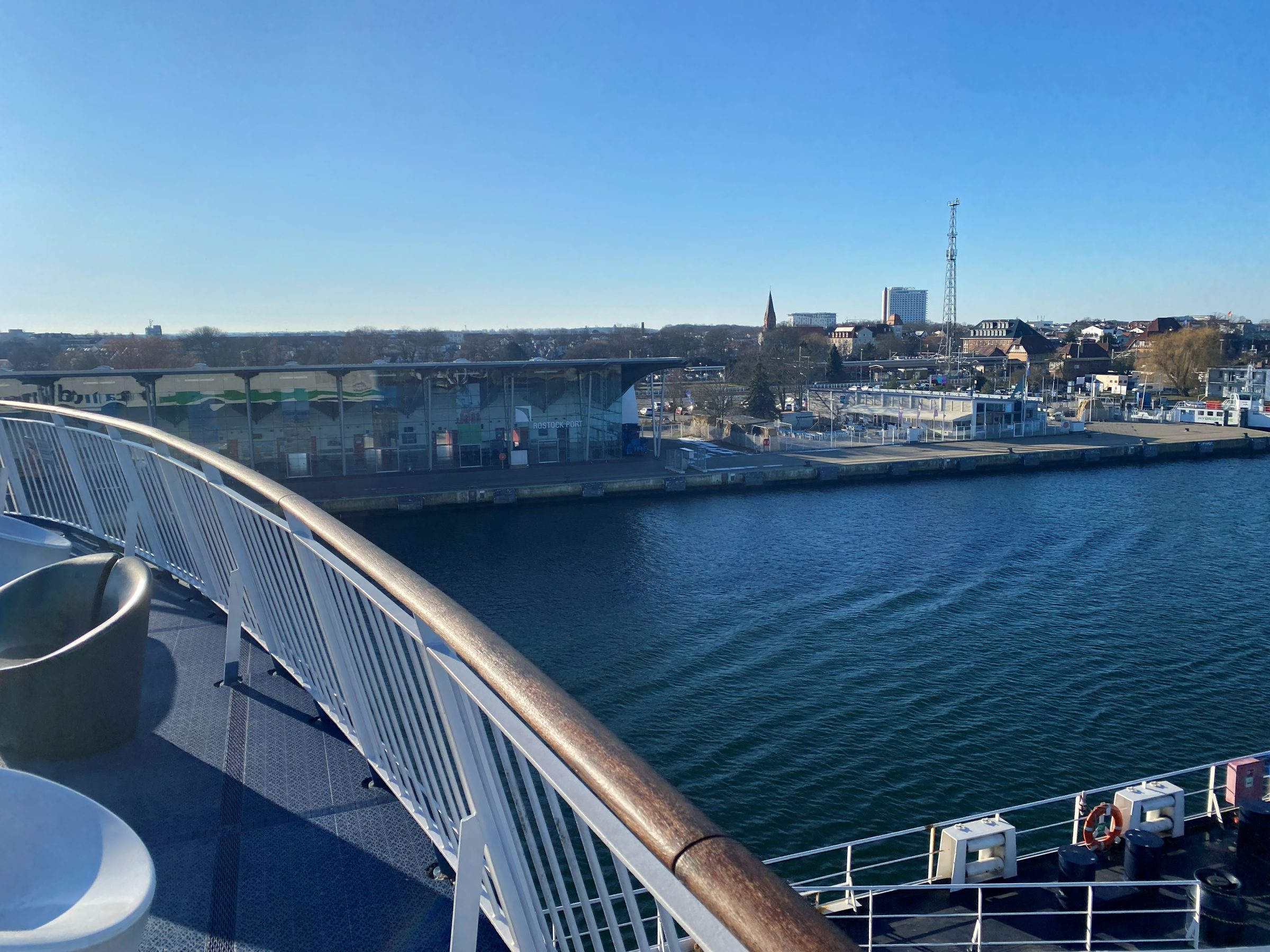
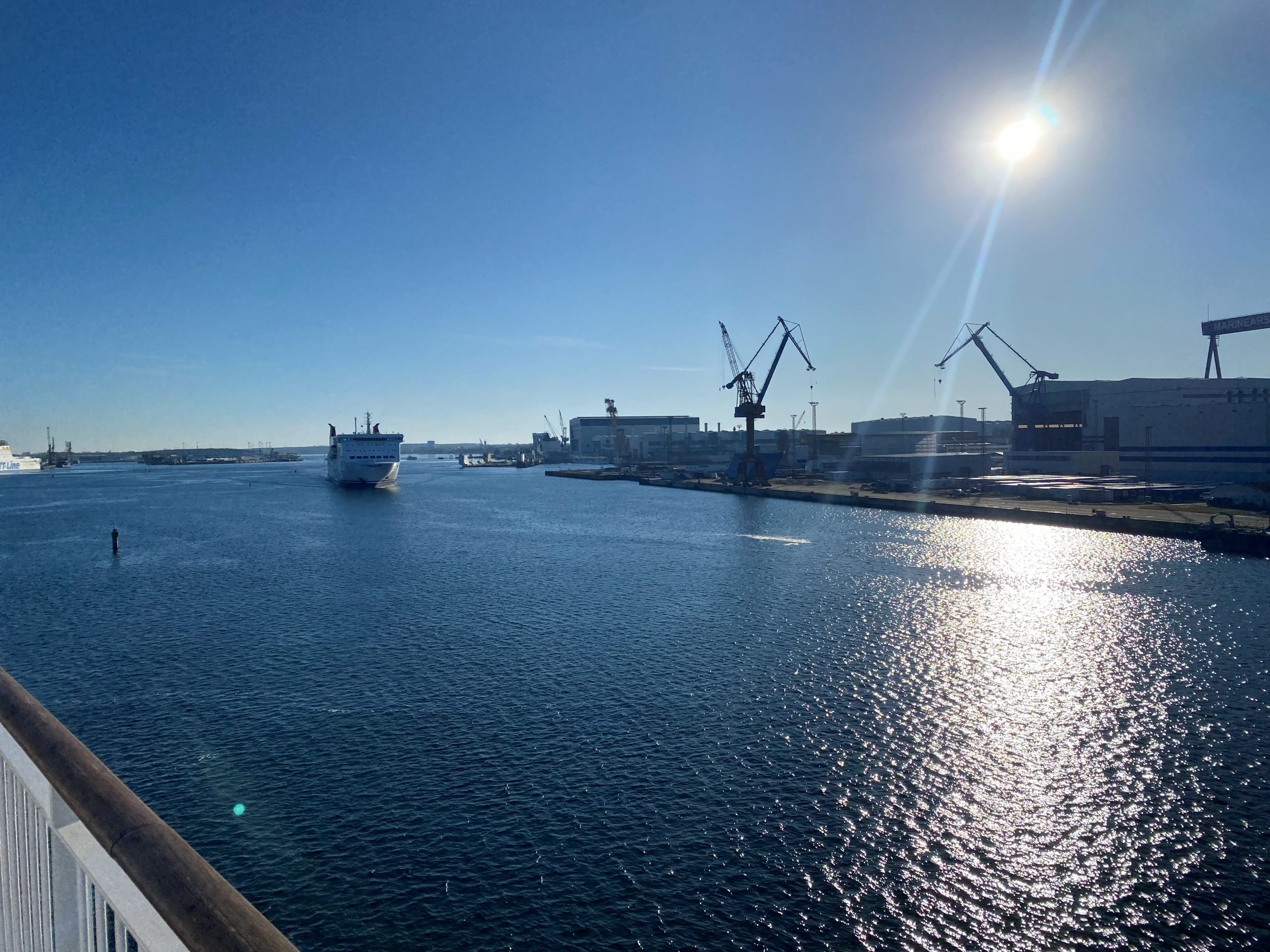
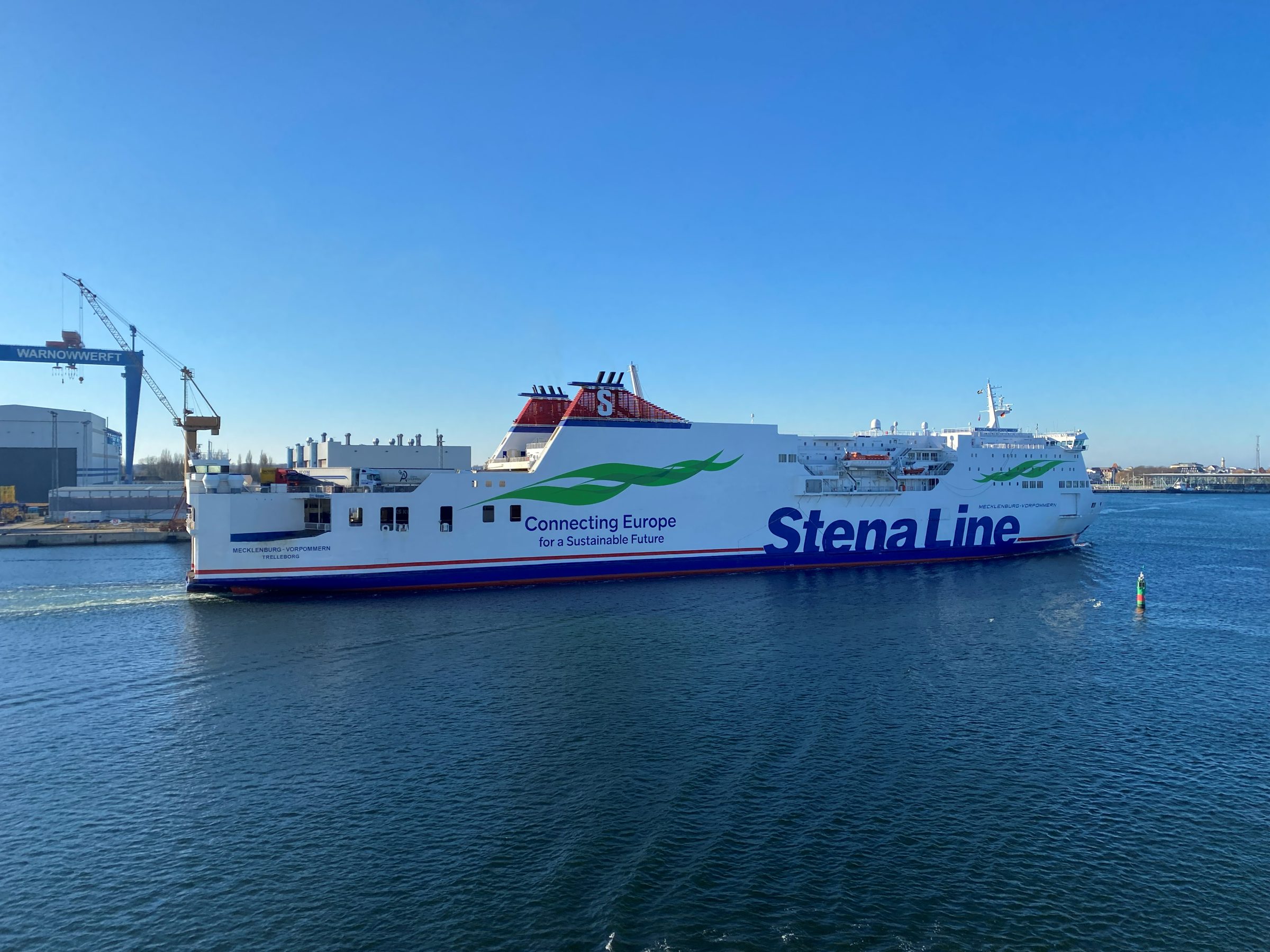
This page tells you how to find it from the A19 and the B105, when to check in, what the terminal offers, how to reach it without a car, and how to fit in a look at Rostock before you sail.
Rostock ferry port at a glance
Where it is
Scandlines Fährcenter, Zum Fährterminal 1, 18147 Rostock (Überseehafen)Weather at the port
Loading forecast…
Facilities
- Check-in booths for cars, ferry centre for foot passengers
- Toilets in the terminal, otherwise little: eat on board
- Scandlines BorderShop in the port (Zum Südtor 5), open daily including Sundays according to Scandlines
- Fast charger for electric cars at the BorderShop
- Yellow check-in lane for travellers with reduced mobility, arrive 30 minutes before departure
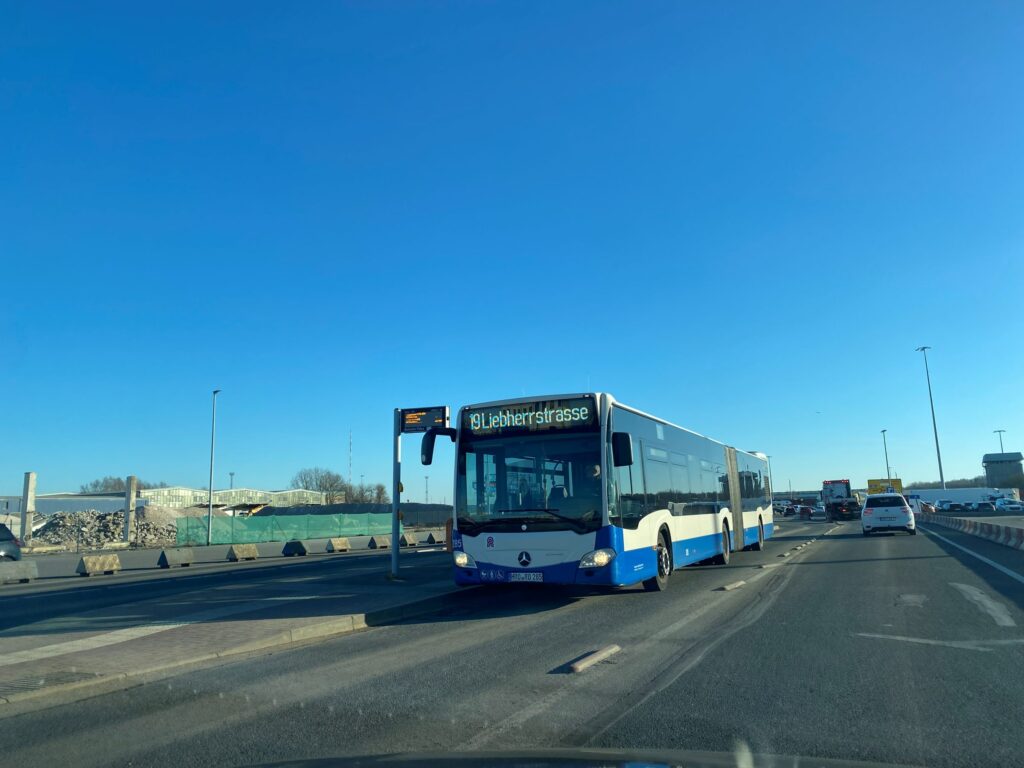
- Bus stop Seehafen for the city bus
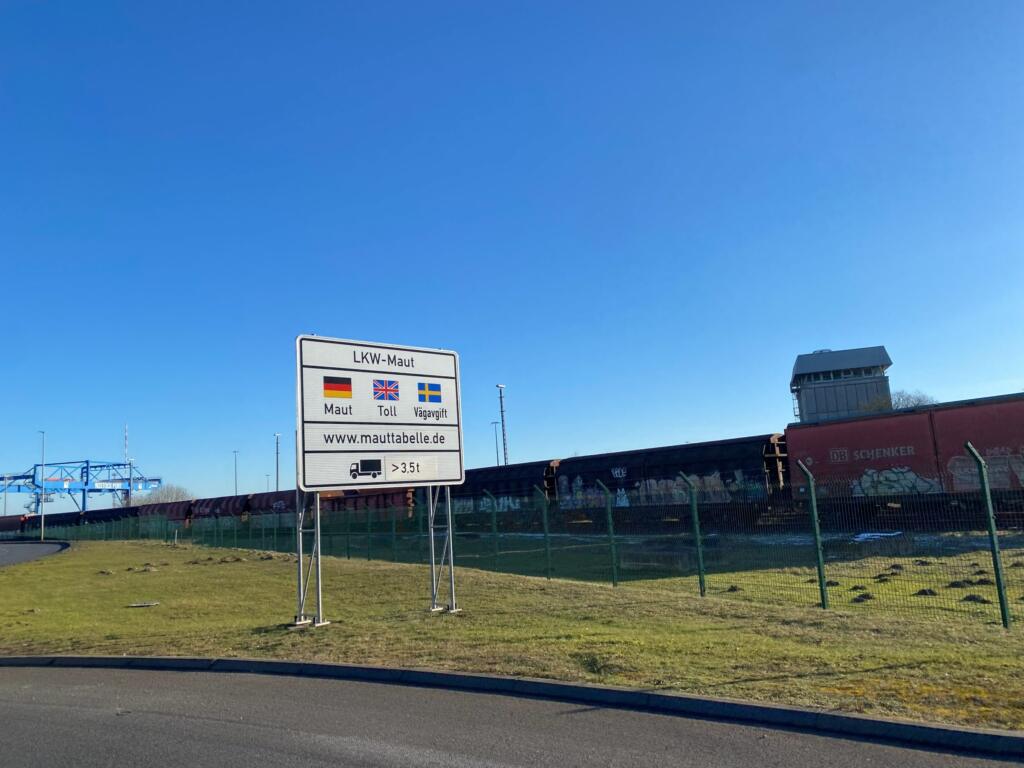
- Truck toll applies in the port area (vehicles over 3.5 t)
Wind and wave maps for the crossing, and what happens in a storm, are on our weather page.
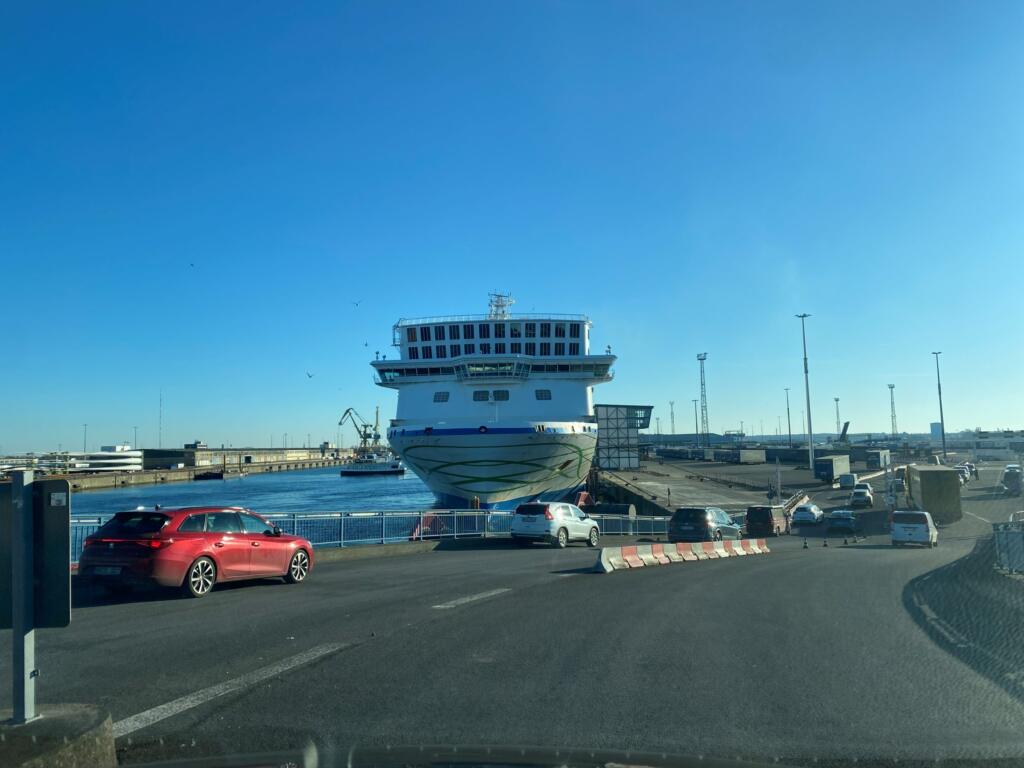
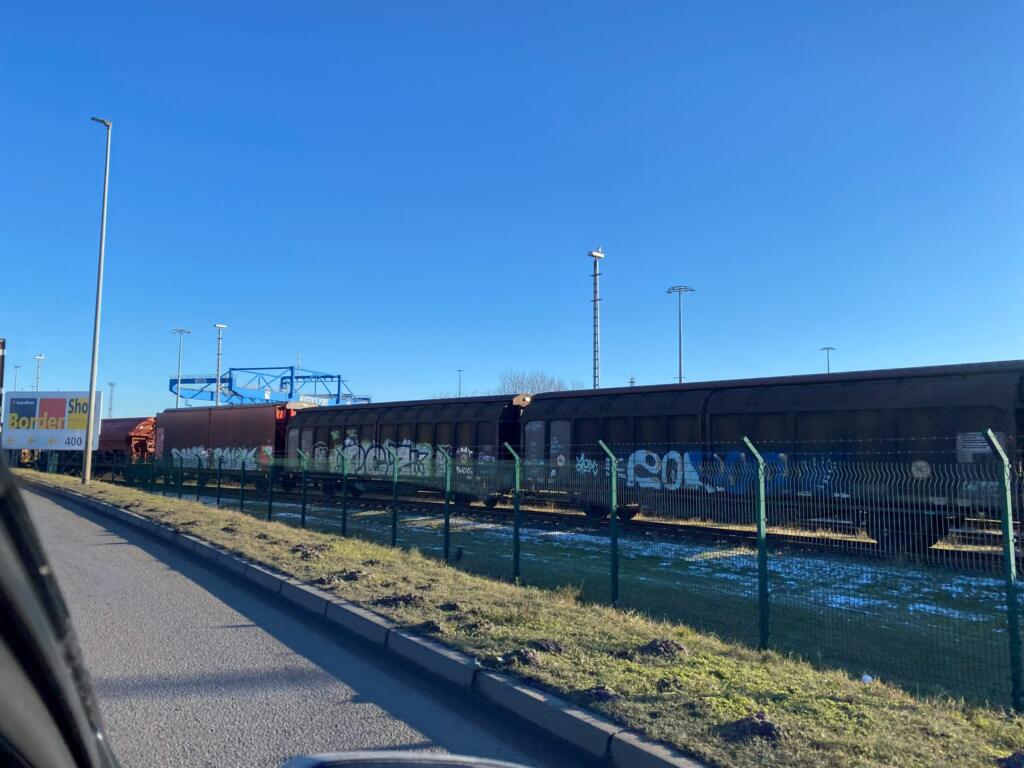
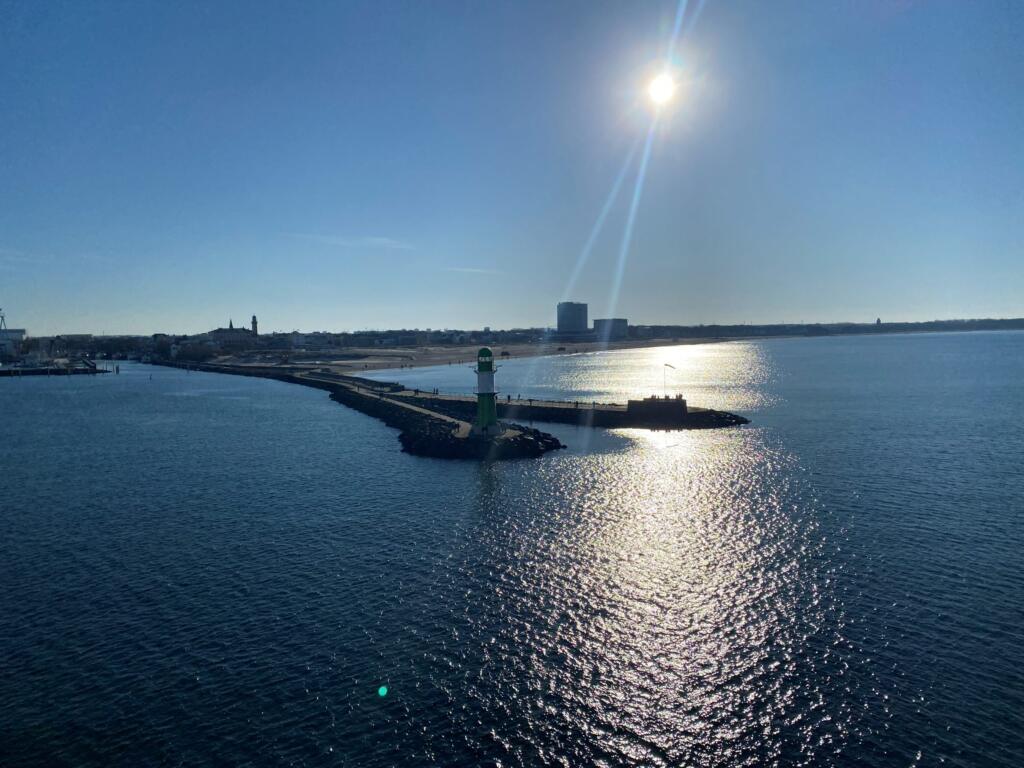
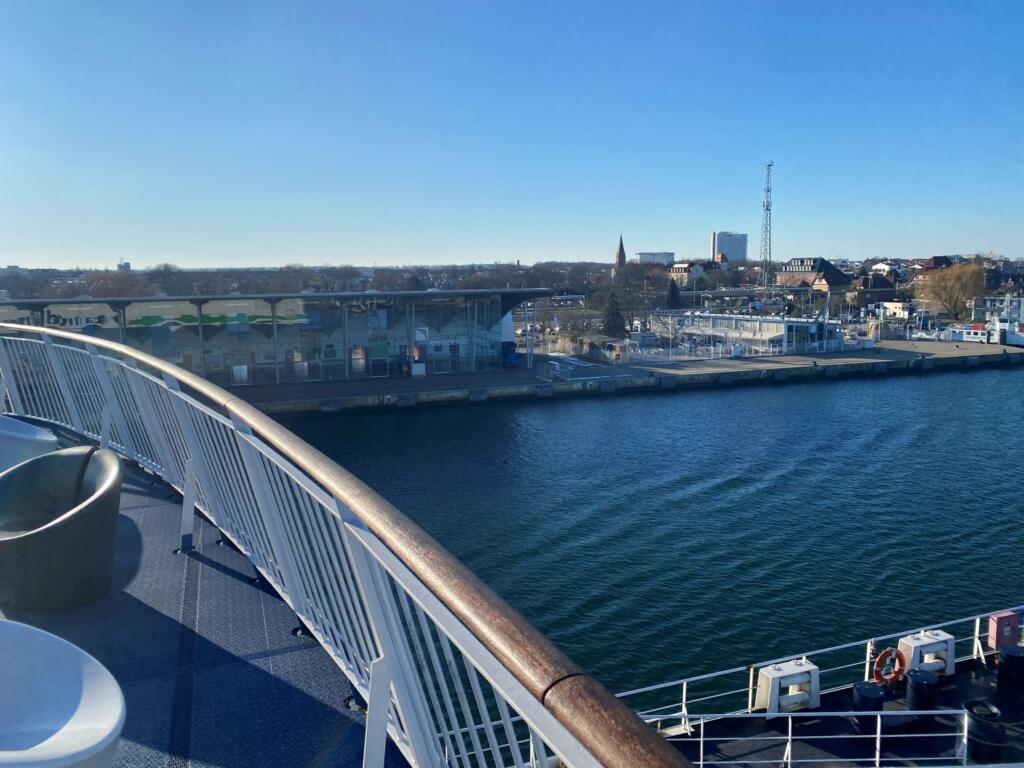
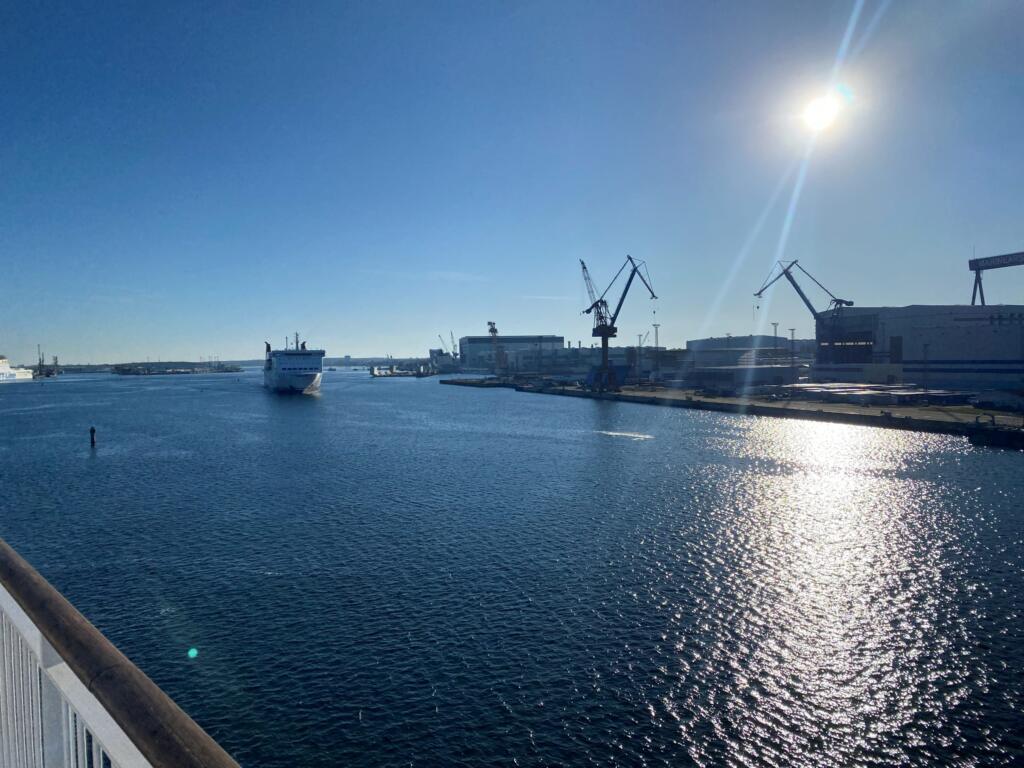
Our visit: we arrived here on the ferry Berlin from Gedser in February 2025 and drove out through the port towards the A19. The photos on this page are from that arrival.
Getting there by car
The port area is big and busy with trucks, but the ferries all leave from the same corner, so once you are on the right road it is hard to miss.
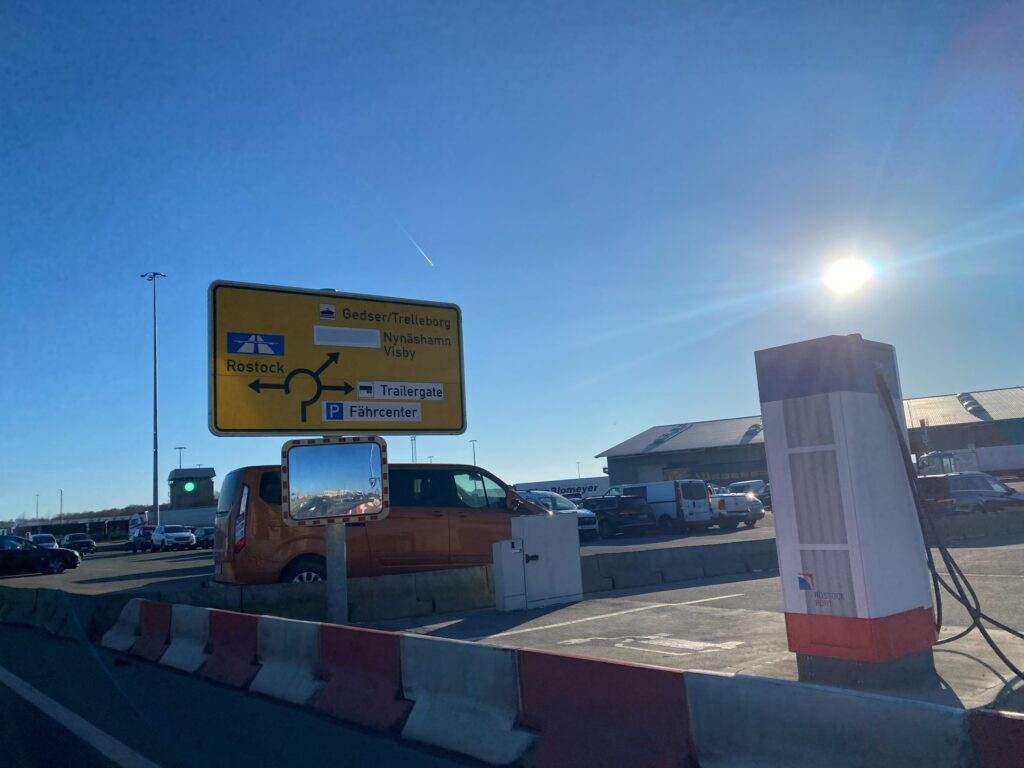
From the A19 (Berlin, the east): stay on the A19 to its end in Rostock and follow the signs “Ostsee-Fähren / Baltic Sea Ferries” and then “Überseehafen”. Inside the port a roundabout sign splits the traffic: Gedser one way, Trelleborg and Nynäshamn the other. Follow “Fährcenter Gedser” to the check-in lanes.
From the A20 and the west (Hamburg, Lübeck): leave the A20 for the B105 and cross the Warnow through the Warnow tunnel, which is a toll road. Take the first exit after the toll plaza, signed “Überseehafen”, and keep left towards the ferry centre.
From Rostock city: the port is on the opposite bank of the Warnow from the old town. Allow 20 to 25 minutes by car via the B105 and the tunnel, more in the afternoon rush.
Overhead signs above the check-in lanes tell you which lane to take. Trucks pay toll in the port area, private cars do not.
Check-in and boarding in Rostock
Scandlines closes check-in for cars 15 minutes before departure and opens it about 2 hours before. With a booking you drive to the check-in booth, show the booking code or your licence plate is read, and you are sent to a numbered waiting lane. Boarding starts about half an hour before departure. Once on the car deck you go upstairs and cannot return to the car until arrival.
Foot passengers check in at the ferry centre (Fährcenter) at least 30 minutes before departure. Tickets for foot passengers are sold there, a 1-day return costs 15.50 euros (Scandlines, 28 September 2026).
The ferries on this route are the Berlin and the Copenhagen. The ramp height limit is 4.2 metres, the car deck is signed at 4.0 metres, so measure a tall motorhome or roof box before you book. Full details on ticket types are on the prices page, departure times on the timetable.
Reaching the port without a car
Rostock Hauptbahnhof is on the other side of the river. The city bus stops at “Seehafen Fähre” right by the ferry centre. According to the Warnow transport association, lines 19, 45 and 49 serve it: from the main station take the S-Bahn to Lütten Klein and then bus 45 or 49, or the tram to Dierkower Kreuz and then bus 45 or 49 (as of September 2026). Check the times at RSAG (rsag-online.de) before you travel, and allow a good 40 minutes from the main station including the walk. A taxi from the station takes about 20 minutes.
Cyclists: the port is on the Berlin Copenhagen cycle route. In Gedser the cycle route to the ferry is signposted, and Scandlines sells a bike add-on for 3 euros with the foot passenger ticket.
On the Danish side, buses 740 and 743 leave from the Gedser terminal to Nykøbing Falster and Marielyst, with trains on to Copenhagen from Nykøbing. That makes Berlin to Copenhagen without a car a realistic one-day journey (8 to 9 hours): train to Rostock, bus to the port, ferry, bus and train to Copenhagen.
Arriving in Rostock from Gedser
The last half hour of the crossing is the best part. The ferry passes the Warnemünde breakwaters with the lighthouse and the beach on your right, then slows down for the long run up the Warnow past the cruise terminal, the Warnow shipyard cranes and the Stena Line berths. There is no rush to get to the car deck when the announcement comes, the ship still needs a few minutes to berth. Once off the ramp you are on the port road, past the BorderShop, and on the A19 within ten minutes.
When we arrived the police were checking individual vehicles at the port exit. It was quick, but keep passports and vehicle papers within reach rather than in the boot.
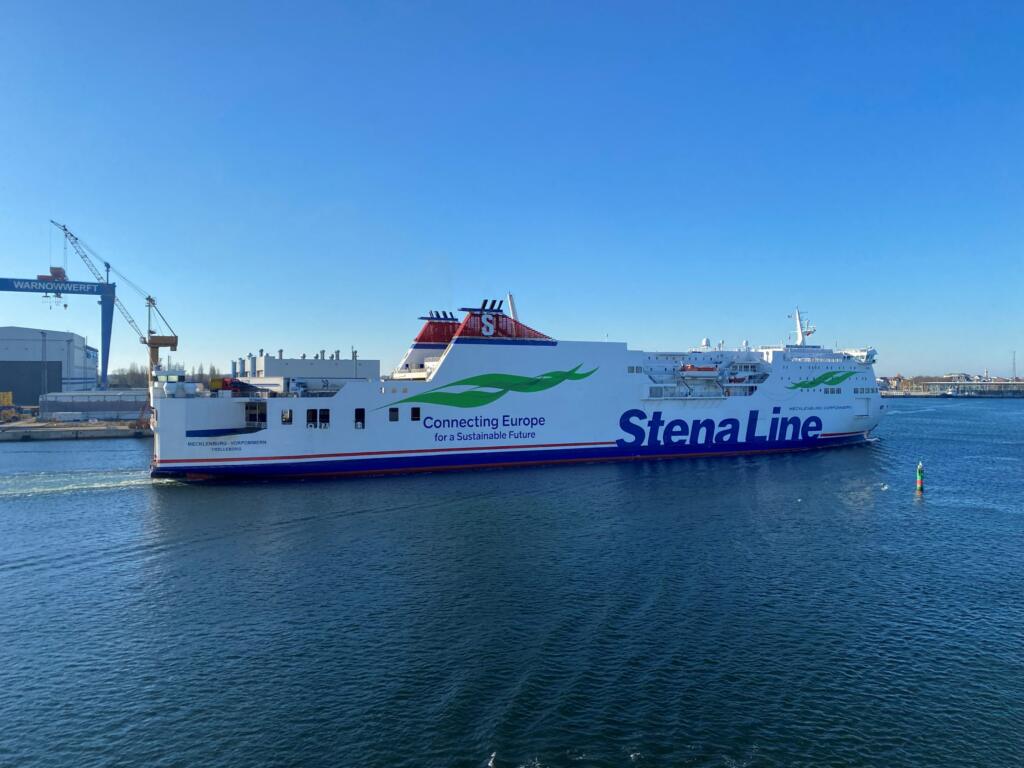
Rostock is also the port for the Stena Line and TT-Line ferries to Trelleborg in Sweden, a crossing of about 6 hours. If Sweden is your goal and you would rather not drive through Denmark, that is the alternative to compare.
Rostock in three hours
The old town is a good 20 minutes by car from the terminal, so a visit only works if you plan for it. Three hours is the minimum for the round trip and a walk. Coming off the A19, look for the street “Am Strande” along the city harbour and the car park “Parkplatz an den Speichern”. From there it is an 18 minute walk into the old town.
- St Mary’s Church (Marienkirche), the Gothic landmark with the astronomical clock
- Kröpeliner Straße, the main shopping street with cafés and the Kröpeliner Tor at the end
- The town hall and the Neuer Markt square
- The city harbour on the Warnow, a pleasant stroll with boats and cranes
- Kunsthalle Rostock for modern art, the Kulturhistorisches Museum in the old monastery for the city’s history
With less time, Warnemünde on the way in is the easier stop: beach, lighthouse and fish sandwiches on the Alter Strom, about 15 minutes from the port by car.
Rostock ferry port FAQ
What is the address of the Rostock ferry terminal for the Gedser ferry?
Scandlines gives Zum Fährterminal 1, 18147 Rostock. Navigate to “Rostock Überseehafen” and follow the signs for Ostsee-Fähren and Fährcenter Gedser.
Does the ferry to Gedser leave from Warnemünde?
No. Warnemünde has the cruise terminal and the small Warnow car ferry. The Scandlines ferry to Gedser leaves from the Überseehafen further up the river, on the east bank.
How early should I be at the port?
Check-in for cars closes 15 minutes before departure, for foot passengers 30 minutes before. With a motorhome, trailer or in the holidays aim for 30 to 45 minutes.
Is there parking at Rostock ferry port?
Cars normally go on the ferry, so long-term parking is not what the port is built for. Foot passengers can ask Scandlines about parking near the ferry centre. For a visit to the city, park at “Parkplatz an den Speichern” on Am Strande.
Can I get to the port by public transport?
Yes, the city bus stops at Seehafen next to the ferry centre. Check RSAG for the current line and times from Rostock Hauptbahnhof.
Which other ferries sail from Rostock?
Stena Line and TT-Line sail to Trelleborg in Sweden, about 6 hours. Scandlines’ other Denmark route, Puttgarden Rødby, leaves from Fehmarn, about 150 km to the west.
Sailing from Rostock? Check today’s fares and book directly with Scandlines.
Booking online avoids the handling fee of at least €15 at the harbour.